

Choosing a China-based supplier for lamps lighting is not simply a search for the lowest unit price. The right partner must balance product quality, customization, lead time, and clear communication. A bright showroom sample can look convincing. Consistent production matters more.
The International Energy Agency has reported that lighting accounts for about 15% of global electricity use and 5% of greenhouse-gas emissions. That matters. Efficient products can reduce energy use, but claims need checking against test data. National averages cannot tell buyers which factory will meet their needs. A careful comparison should examine product range, quality controls, certifications relevant to the destination market, and after-sales support.
Architect Le Corbusier once wrote, “Light creates ambience and feel of a place, as well as the expression of a structure.” The quote points to a practical truth: a lamp is both a technical product and part of a lived space. For buyers comparing China suppliers, this guide focuses on evidence, not polished catalog photos. Check sample consistency, request photometric files, and ask how defects are handled. A useful shortlist also compares minimum order quantities, customization options, and delivery records. There is no universal winner. A supplier suited to a hotel project may not fit a small retail order. Even thorough checks have limits; a factory visit or independent inspection can reveal details a brochure cannot.
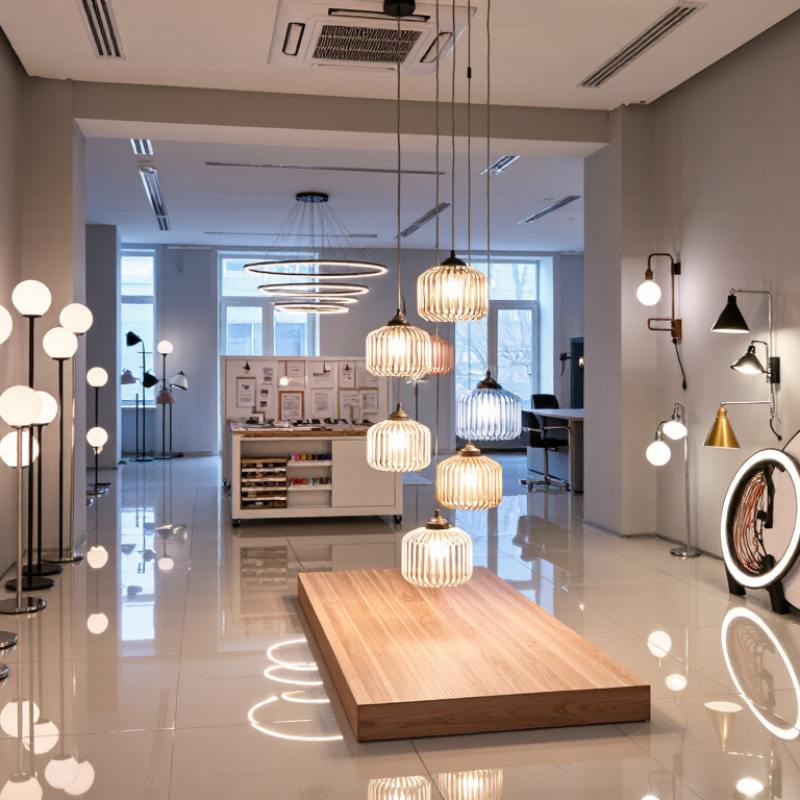
“Best” is not a single product feature. For lamps and lighting, it means balancing safety, useful light output, dependable production, and the ability to ship consistently. A bright sample tells only part of the story.
For safety, request test reports that match the exact model and destination market. Check wiring, insulation, heat management, and the driver, not just the housing. Efficacy matters too: compare measured lumens per watt and ask whether figures come from a finished fixture or a bare light source. Small details matter. A poorly controlled beam can create glare, even when the output looks impressive.
Reliability is harder to judge from a showroom sample. Ask how the supplier tracks batches, handles defects, and keeps materials consistent across repeat orders. Review warranty terms and clarify what happens when a shipment arrives with damaged units. Export capability should be visible in clear specifications, accurate packing lists, suitable protective packaging, and responsive communication about delivery schedules. These checks take time. They are not foolproof, either; a tidy document set cannot guarantee every production run. Compare evidence, request samples from current production where possible, and leave room for honest uncertainty. No supplier is perfect. The better choice is the one that can explain its limits and support its claims.
CALI reports US$54.5 billion in China’s lighting exports for 2023. That figure maps a substantial supplier base, but export value alone cannot identify the best factory. It may include many product types, price levels, and production models. Useful context, not a quality score. Buyers should check whether a supplier’s actual range matches the project, from recessed downlights to outdoor fixtures.
Tips: Request a dated product specification, sample, and test documentation. Compare light output, color consistency, materials, and warranty terms. Ask who handles quality checks before shipment. Small details matter.
A careful supplier review should look beyond a polished catalog. Ask for clear production lead times and confirm how changes are managed after a sample is approved. A warm-white lamp may look different in a real room than in a product photo. That is easy to overlook. Where possible, test samples under the intended ceiling height and surrounding finishes. Also verify that quoted prices cover the required packaging and accessories. Export scale can help buyers find options, but it cannot replace direct checks. One weakness in this approach: samples may not reveal every production variation, so expectations should be agreed in writing.
China’s reported lighting exports reached US$54.5 billion in 2023, illustrating the scale of its supplier base.
Source: CALI. This national export total shows industry scale; it does not rank individual suppliers.
China’s lighting suppliers serve different needs. OEM/ODM factories suit buyers needing custom housings, packaging, or private-label specifications. Ask for a production sample, material list, and test reports before approving a large order. A polished catalog is not evidence of consistent output.
For LED fixtures, compare system efficacy, thermal design, driver quality, and color consistency—not just chip specifications. The U.S. Department of Energy’s 2020 U.S. Lighting Market Characterization estimated that LEDs made up about 47% of installed lighting stock.
Its 2022 Solid-State Lighting R&D Opportunities report identifies 250 lumens per watt as a long-term efficacy benchmark for LED packages. Fixture performance can be lower. Check measured lumens per watt for the complete fitting.
Decorative suppliers need close checks on finish, glass thickness, and assembly; photograph samples under the same light. Smart-lighting suppliers should demonstrate app pairing, control response, and recovery after a network outage. Ask for a live demo. Small details matter. One weak point: prototype quality may not match a full production run. Request batch inspection records, repeat-order samples, and clear warranty terms before comparing prices.
When comparing Chinese lighting suppliers, ask for evidence behind both safety and lifetime claims. IEC 60598-1:2020 sets general safety requirements and tests for luminaires, including electrical and thermal checks. A certificate should identify the exact model and test scope; a similar-looking fixture is not enough. Ask for the full report, not only a logo on a product sheet. Check that the tested unit matches the offered driver, housing, and wiring. Small changes matter.
For LED lifetime, request LM-80 data for the actual LED package and its tested current and temperatures. ANSI/IES LM-80 testing runs for at least 6,000 hours, with measurements at intervals no longer than 1,000 hours. TM-21 uses those measurements to project lumen maintenance; it does not guarantee that a complete fixture will last that long. The U.S. Department of Energy’s report, LED Luminaire Lifetime: Recommendations for Testing and Reporting, also warns that system life depends on components beyond the LEDs. Ask for the TM-21 calculation, test conditions, and stated projection limit. Look closely. A large “50,000-hour” claim without these records is weak evidence, even if the number looks precise. I would still compare real samples and inspect their thermal design; paperwork can miss a poor detail.
Rank shortlisted suppliers using verified evidence, not polished catalogs. Request an accredited laboratory’s LM-79 report for complete-luminaire output, input watts, and color data. For LED package longevity, review LM-80 results and TM-21 projections; they are not substitutes for a whole-fixture lifetime test. The U.S. Department of Energy’s Energy Saver guidance says LEDs use up to 90% less energy and can last up to 25 times longer than incandescent bulbs. Those are broad comparisons, not guarantees for every product. Check that test reports match the exact model, driver, and configuration you plan to order.
Small mismatch, big risk.
Build a scorecard and rank suppliers by test-data completeness, MOQ, quoted lead time, and written warranty terms. Record MOQ per model and finish, not just the supplier’s lowest headline figure. Ask for production and shipping estimates separately, then confirm whether the quote covers sample approval and inspection time. A factory promising a short lead time may be quoting before component availability is confirmed.
Get it in writing.
Compare warranties by coverage, claim process, and exclusions, including driver and lumen-maintenance provisions. For a practical check, request samples and inspect glare, flicker, finish consistency, and packaging after delivery.
No spreadsheet catches every failure. I would not treat an attractive price as proof of dependable performance; supplier records can still be incomplete, and that uncertainty belongs in the ranking.