

For global buyers, finding a dependable lighting website in China can feel efficient, yet surprisingly complicated. Product photos may look polished, while specifications remain incomplete. This guide introduces ten Chinese lighting websites serving international customers, from architectural fixtures to decorative pendants and commercial LED systems.
The selection considers product range, technical information, export experience, communication quality, and visible business credibility. We examine whether each platform explains wattage, color temperature, materials, certifications, shipping options, and customization clearly. These details matter. A warm brass pendant, for example, may appear identical across several stores, but its coating, wiring, socket standard, and packaging can differ greatly.
Our research also reflects practical buying concerns. A website may offer attractive prices but provide limited documentation. Another may respond quickly yet show inconsistent product data. That is not necessarily a failure, but it deserves attention. Buyers should request current quotations, sample photos, test reports, and shipping terms before placing substantial orders. Independent verification remains important, especially when supplier information changes over time.
This overview is not a guarantee or a replacement for professional due diligence. It is a practical starting point for comparing established online sources, identifying suitable manufacturers, and narrowing a long supplier list. We also acknowledge one limitation: online presentation cannot fully reveal factory conditions, inspection procedures, or after-sales performance. Careful communication and sample evaluation still make the difference. The best choice is rarely the cheapest listing. It is the supplier that combines consistent quality, transparent evidence, responsive service, and realistic delivery commitments.
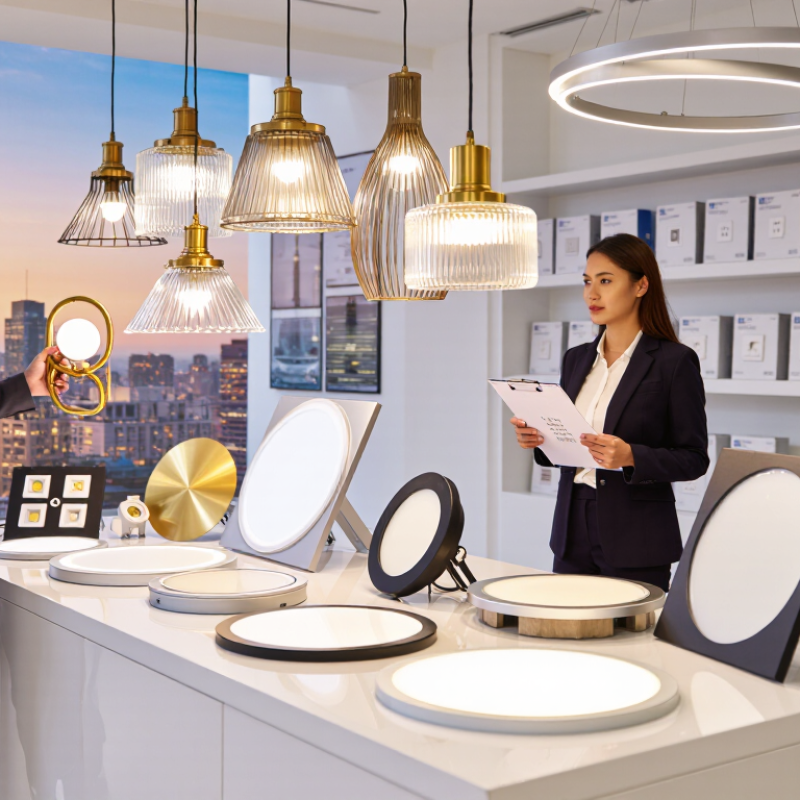
China’s top 10 lighting websites can help global buyers compare suppliers, products, and purchasing conditions in one place. Their value is not only product variety. Good websites show wattage, color temperature, beam angle, dimensions, materials, and installation details. These specifications make early comparisons more practical. Clear product photos also reveal housing quality, cable placement, finishes, and packaging methods.
Useful platforms often provide supplier profiles, transaction histories, response times, and factory information. Some offer sample orders, secure communication, and shipping estimates. Buyers can request test reports, safety certificates, drawings, and customized quotations before making decisions. This supports a more professional sourcing process and reduces avoidable misunderstandings. In my experience, a precise inquiry gets better results than a short message saying, “Please send your best price.” Small details matter.
Still, online information is not proof by itself. A polished page may hide slow production or inconsistent quality. That happens. Global buyers should compare several suppliers, verify documents, order samples, and confirm lead times in writing. Reviews can help, but they may be incomplete or outdated. Product prices also change with materials, exchange rates, packaging, and shipping routes. Buyers should examine return terms, payment conditions, and quality inspection options carefully. A website is a useful starting point, not a final guarantee.
When comparing China’s top lighting websites, do not judge them by design alone. A polished homepage may hide weak product information. Check whether each listing shows wattage, lumen output, beam angle, colour temperature, CRI, voltage, and IP rating. Clear technical data suggests stronger product knowledge. Missing files should raise questions.
Compare suppliers using the same checklist. Review product photos, installation drawings, photometric files, sample policies, minimum order quantities, lead times, warranty terms, and packaging details. Look for factory addresses, quality-control procedures, test reports, and documented export experience. Independent laboratory reports are more useful than vague claims such as “premium quality.” Communication also matters. Ask one technical question and measure the response. I have found that fast replies can still be incomplete, so speed should not replace accuracy. That is an easy mistake to make.
Tips: Request a sample before making a large decision. Test its brightness, colour consistency, heat, connectors, and surface finish. Confirm the exact model number on the quotation and sample. Compare total landed cost, not only the listed unit price. Recheck every specification. Websites sometimes contain outdated information, and buyers may overlook small differences between similar products. Keep written records of approvals, revisions, and agreed delivery details.
How to Evaluate and Compare China’s Top Lighting Websites
This 100-point evaluation framework helps global buyers compare lighting websites without relying only on visual design. Product range, technical specifications, certifications, order flexibility, pricing transparency, customization, delivery information, logistics support, content quality, and buyer communication are key factors in supplier screening.
China’s Top 10 Lighting Websites by Product Range and Market Focus
China’s top ten lighting websites should be judged by more than traffic. A useful review compares product range, export readiness, technical data, and market focus. The list covers residential fixtures, commercial systems, industrial lamps, outdoor lighting, smart controls, LED components, and project solutions. This wider structure helps global buyers match a website with real purchasing needs.
Product depth matters. The International Energy Agency reports that lighting uses about 15% of global electricity demand, making efficiency a serious procurement issue. Websites with clear wattage, lumen output, beam angle, color temperature, and lifespan data deserve higher attention. Buyers should also check photometric files, warranty terms, factory audits, and certification information. Some websites show attractive images but provide weak technical evidence. That is a warning sign.
Market focus separates these ten websites. Some support wholesalers with carton details and mixed-order options. Others target architects through project libraries, lighting calculations, and specification tools. Export-oriented platforms often provide multilingual pages, shipping information, and compliance guidance for major markets. Their product range may look broad, yet filters can be confusing. That weakness should remain visible in any ranking. This selection uses product coverage, data quality, buyer usability, and international support as practical measures. The methodology is not perfect, but it is more useful than ranking websites by search position alone.
| Rank | Website Profile | Main Product Range | Primary Buyer Segment | Main Market Focus | Common Compliance Requirements | Typical Sourcing Use |
|---|---|---|---|---|---|---|
| 01 | Full-Spectrum Lighting Marketplace | Residential, commercial, outdoor, industrial, smart and decorative lighting | Importers, distributors and project contractors | North America, Europe, the Middle East and Southeast Asia | CE, RoHS, EMC, LVD; UL or ETL for applicable North American products | Multi-category supplier discovery and quotation comparison |
| 02 | Commercial Project Lighting Directory | Panel lights, downlights, linear systems, track lights and office fixtures | Architects, lighting designers and commercial developers | Europe, Australia, North America and Gulf countries | CE, RoHS, photometric files and electrical safety testing | Office, retail, hospitality and public-building projects |
| 03 | LED Technology Supplier Portal | LED bulbs, tubes, modules, drivers, strips and retrofit lamps | Electrical wholesalers, OEM buyers and maintenance suppliers | Global replacement-lamp and energy-efficiency markets | CE, RoHS, EMC, LVD, LM-79 or equivalent performance documentation | LED retrofit sourcing and private-label development |
| 04 | Outdoor and Landscape Lighting Hub | Floodlights, streetlights, garden lights, bollards, wall lights and underground fixtures | Municipal contractors, landscape firms and property developers | Middle East, Africa, Southeast Asia, Europe and Latin America | IP65–IP68 protection, CE, RoHS, EMC and regional safety marks | Road, façade, garden, parking and public-area lighting |
| 05 | Industrial and High-Bay Lighting Source | High-bay, low-bay, warehouse, workshop, explosion-resistant and area lights | Factories, logistics operators and industrial distributors | Manufacturing regions in Europe, North America and Asia-Pacific | IP65 or higher, IK rating, CE, RoHS, EMC and hazardous-area certification when required | Energy-saving upgrades and industrial facility projects |
| 06 | Decorative and Hospitality Lighting Gallery | Pendant lights, chandeliers, wall sconces, table lamps and statement fixtures | Interior designers, furniture retailers and hotel procurement teams | Europe, North America, the Middle East and upscale Asian markets | CE or regional electrical safety approval; RoHS for applicable electronic components | Interior decoration, hotels, restaurants and residential developments |
| 07 | Solar and Off-Grid Lighting Platform | Solar streetlights, solar garden lights, integrated units, panels, batteries and controllers | Rural infrastructure buyers, NGOs, municipalities and distributors | Africa, South Asia, Southeast Asia, Latin America and remote regions | CE, RoHS, IP ratings, battery transport documentation and local electrical requirements | Off-grid public lighting and low-maintenance installations |
| 08 | Smart and Connected Lighting Marketplace | Connected lamps, sensors, gateways, controls, dimming systems and building-management interfaces | Smart-home integrators, facility managers and technology distributors | Developed markets with smart-building adoption | CE, RoHS, EMC, radio-equipment approval and cybersecurity documentation where applicable | Connected homes, offices, hotels and energy-management systems |
| 09 | Retail and Residential Lighting Catalog | Ceiling fixtures, downlights, bulbs, cabinet lights, fans with lights and bathroom fixtures | Home-improvement retailers, e-commerce sellers and residential contractors | Global consumer and renovation markets | Regional electrical safety marking, energy labeling and RoHS where applicable | Standardized retail products and private-label collections |
| 10 | OEM and Custom Lighting Engineering Portal | Custom luminaires, LED modules, enclosure design, optics, drivers and contract manufacturing | Lighting brands, engineering firms and specialist distributors | Global B2B markets requiring customized specifications | Project-specific testing, CE, RoHS, UL or other destination-market approvals | Prototype development, customized production and long-term supply programs |
Note: The profiles above describe common China-based lighting website categories and buyer applications without displaying company or brand names. Compliance requirements vary according to product type and destination market.
China Top 10 Lighting Websites for Global Buyers?
A useful lighting website should show more than attractive product photos. Look for clear specifications, including wattage, lumen output, beam angle, color temperature, and color rendering index. Product pages should also state housing materials, dimensions, input voltage, and expected lifetime. Downloadable datasheets and photometric files make technical comparison easier. A small warning: some pages display incomplete data.
Certification details deserve careful checking. Depending on the destination, buyers may need CE, RoHS, UKCA, ETL, or other market-specific documentation. Certificates should match the exact product model, not merely the product family. Check issuing laboratories, report dates, and test standards. When possible, verify documents through accredited testing bodies or request recent samples. Websites claiming “international approval” without evidence require extra caution.
Buyer services often reveal a supplier’s real experience. Look for sample orders, dimming or control-system support, packaging details, spare-part policies, and written warranty terms. Responsive teams should answer installation and compliance questions with specific documents. Ask about production lead times, inspection procedures, replacement handling, and shipping responsibilities. Do not rely only on chat promises. Confirm important points by email and keep the records. I have found that polished websites can still hide unclear after-sales processes. That weakness does not always mean poor quality, but it deserves investigation. Reliable suppliers explain limitations, admit mistakes, and provide practical solutions before payment.
China Top 10 Lighting Websites for Global Buyers?
When comparing the top ten lighting websites, do not judge quality by photographs alone. Look for a complete company profile, factory address, production capacity, and export experience. A polished website can still hide weak production control. Ask whether the supplier provides current product samples, technical drawings, and test reports.
Check measurable details carefully. Confirm lumen output, color temperature, CRI, beam angle, and IP rating. For outdoor projects, request images of sealed connectors and water-resistant packaging. For commercial interiors, compare driver performance and flicker data. Reliable suppliers explain these specifications clearly. Vague answers deserve caution.
Communication reveals practical expertise. Send the same inquiry to several suppliers and compare response time, quotation structure, MOQ, lead time, warranty, and payment terms. Request a pre-production sample before placing a large order. Review the carton design, labels, wiring, and installation guide. Small details matter.
Do not rely on certificates copied into a webpage. Ask for document numbers and verify them through the issuing organization when possible. Video calls can show machines, testing areas, and finished goods, but staged views are possible. I would also ask for recent project references, while protecting client confidentiality. My own checklist would include a second technical review, because one overlooked voltage detail can delay an entire shipment.