


10 Tips for Finding the Best Lighting Website

Choosing a lighting website can feel simple until two similar fixtures show different color temperatures, beam angles, or installation requirements. A useful site makes those differences easy to check. Look for clear product photography, measured dimensions, lamp compatibility, and visible warranty and return information. A close-up of a brushed brass finish helps, but it cannot replace a precise specification sheet. Small omissions matter.

James Turrell, an artist renowned for working with light, said, “Light is not so much something that reveals, as it is itself the revelation.” His words offer a helpful lens for evaluating a lighting website: does the site explain how a fixture shapes a room, or merely display a product? Consider whether filters work, descriptions answer practical questions, and customer support can clarify details before purchase. Good information builds confidence. Still, a beautifully designed page is not proof of dependable service, and online images can misrepresent scale or color. That uncertainty deserves attention.

The ten tips ahead focus on practical checks, from comparing technical details to reviewing delivery and after-sales support. They are not a guarantee of a perfect purchase. Rather, they help you notice what is present, what is missing, and what needs another question. A site may look impressive at first glance. Read the specifications closely.
10 Tips for Finding the Best Lighting Website

Identify Your Lighting Needs and Project Requirements

10 Tips for Finding the Best Lighting Website

Identify Your Lighting Needs and Project Requirements

Before opening any lighting website, define what the space must do. A kitchen needs clear task lighting, while a bedroom needs softer, restful layers. Write down room size, ceiling height, existing wiring, and natural light. Measure twice. I once chose fixtures by appearance alone, then discovered the canopy was too wide for the junction box. That mistake cost time and a return fee.

Your project requirements should include brightness, color temperature, controls, mounting method, and maintenance access. For a reading corner, check lumens and beam direction, not just the fixture’s photographs. For a damp bathroom, confirm the product’s safety rating and installation suitability. Ask whether replacement parts and technical documents are available. Reliable websites explain dimensions, materials, certifications, and delivery conditions clearly. Vague details deserve caution.

Create a practical shortlist before browsing deeply. Set a budget range, quantity, finish, and deadline. Save product pages with exact measurements and wiring notes. Compare the website’s information with an electrician’s advice when installation is complex. Online descriptions can omit ceiling compatibility or local electrical requirements. I still miss small details sometimes, especially when a design looks perfect. Leave room to reconsider. The best choice should fit the room, the installation, and daily habits—not only the screen.


Assess the Website’s Product Range and Specifications

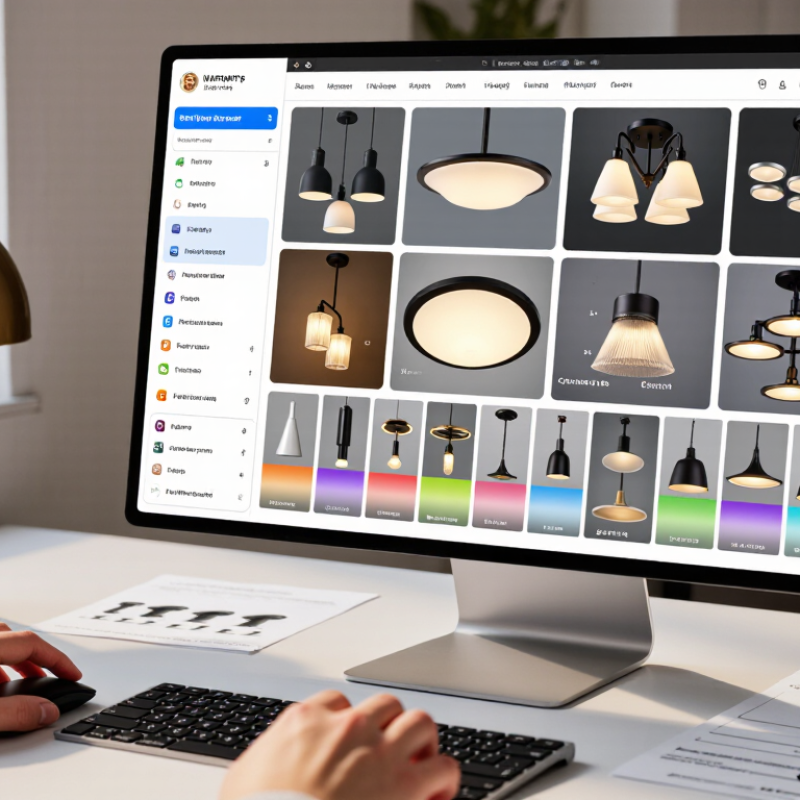
When comparing lighting websites, I start with the product range, not the homepage design. A useful site should offer ceiling lights, wall fixtures, pendants, task lamps, and outdoor options. This variety helps you match each room’s purpose and mood. Check whether products are grouped by room, fitting type, brightness, and finish. Clear filters save time. They also reveal gaps.

Tip: Read every specification panel carefully. Look for dimensions, material, bulb type, wattage, lumens, color temperature, voltage, IP rating, and dimming compatibility. For smart or adjustable fixtures, check control methods and included components. I once chose a fitting by appearance alone and underestimated its depth. The light looked elegant online, but it crowded a narrow hallway. Measurements matter. Product photos can mislead, especially when scale references are missing. Reliable websites show diagrams, installation requirements, energy information, and care instructions. Expert support should explain technical terms without pushing a sale.

Tip: Compare several listings before trusting one specification. Details may differ between product pages, and small errors happen. I would question unclear claims rather than assume they are accurate. Look for downloadable manuals, realistic delivery information, warranty terms, and user reviews with installation details. A broad catalog is useful, but only when its data remains consistent. Even then, recheck measurements against your wall, ceiling, or furniture plan. That extra check prevents an expensive mismatch.

10 Tips for Finding the Best Lighting Website: Assess Product Range and Specifications

Use this checklist to evaluate whether a lighting website provides sufficient product variety and the technical details needed for an informed purchase. A strong product page should clearly state essential specifications such as wattage, lumens, colour temperature, dimensions, voltage, dimmability and ingress protection where relevant.

The chart shows the number of core specification fields that should be checked across common lighting product categories. Categories requiring ingress protection typically need an IP rating, while decorative indoor products may not.

Verify Retailer Credibility, Policies, and Customer Support

A trustworthy lighting website should feel clear before it feels impressive. Check its business address, contact details, and ownership information. Look for detailed product specifications, including bulb type, voltage, dimensions, materials, and safety certifications. A polished homepage proves little. I once trusted attractive product photos and missed the missing installation details. That mistake made comparison harder.

Tip 1: Test the retailer’s credibility. Read recent reviews across several independent platforms, not only testimonials on the website. Check whether customers mention accurate delivery times, product quality, and helpful responses. Clear photographs of packaging and fixtures can also reveal practical details. Be cautious when every review sounds identical.

Tip 2: Read the policies carefully. A reliable retailer should explain returns, refunds, damaged-item claims, shipping fees, and warranty coverage in plain language. Look for specific time limits and instructions for reporting damage. Save a copy before ordering. Policies can change. Tip 3: Contact customer support before buying. Ask one precise question about compatibility or installation. Professional support should answer directly and avoid pressure. Notice response time, tone, and technical understanding. If the reply feels vague, reconsider the purchase. Still, support teams can make mistakes, so verify important information against product documents and local electrical requirements.

10 Tips for Finding the Best Lighting Website - Verify Retailer Credibility, Policies, and Customer Support

No. Verification Area What to Check Reliable Evidence Warning Signs Recommended Action
1 Confirm Business Identity Look for a legal business name, physical or registered address, telephone number, and professional email address. The information is displayed consistently across the website, invoice, contact page, and applicable business registers. Only a contact form is provided, or the address is incomplete, unverifiable, or unrelated to the business. Verify the seller’s identity before placing an order or sharing payment details.
2 Check Product Specifications Review dimensions, materials, bulb compatibility, voltage, wattage, color temperature, brightness, and installation requirements. Product pages provide measurable specifications, technical diagrams, manuals, and safety information. Descriptions rely on vague phrases such as “high quality” without electrical or dimensional details. Compare the stated specifications with your room, fixture, electrical system, and intended use.
3 Review Pricing Transparency Determine whether the listed price includes taxes, delivery charges, assembly costs, and any required accessories. The checkout page presents a clear itemized total before payment is authorized. Unexpected fees appear late in checkout, or unusually large discounts are presented without clear terms. Compare the final delivered cost rather than comparing product prices alone.
4 Read the Shipping Policy Check delivery regions, estimated processing time, carrier arrangements, tracking availability, and responsibility for transit damage. The policy states time frames, delivery conditions, and procedures for delayed or damaged shipments. Delivery estimates are missing, contradictory, or described only as “fast shipping.” Save a copy of the shipping terms and inspect the package promptly after delivery.
5 Understand the Return Policy Check the return window, eligible product condition, restocking charges, return shipping costs, and refund method. The policy clearly explains exclusions for customized, installed, clearance, or electrical products where applicable. Return terms are hidden, difficult to understand, or different from the checkout information. Choose a seller with written, accessible terms that match your purchase risk.
6 Verify Warranty Coverage Identify the warranty duration, covered defects, claim process, required proof of purchase, and exclusions. Warranty terms are written in accessible language and specify who handles repair, replacement, or return shipping. The site promises a “guarantee” but provides no duration, coverage details, or claim instructions. Keep the order confirmation, receipt, product documentation, and installation records.
7 Assess Customer Support Test whether support is available through a usable email address, telephone number, live chat, or service ticket system. A pre-purchase question receives a relevant response with clear technical or order assistance. Messages go unanswered, automated replies avoid the question, or support cannot explain basic specifications. Ask about compatibility, delivery, and returns before purchasing a complex fixture.
8 Evaluate Reviews Carefully Read reviews from multiple sources and focus on delivery accuracy, product quality, packaging, returns, and support. Reviews contain specific experiences, balanced opinions, dates, and details that can be independently compared. Reviews are identical, overly generic, concentrated in a short period, or limited to the seller’s own website. Use reviews as one evidence source rather than relying on star ratings alone.
9 Check Payment and Website Security Confirm that checkout uses HTTPS and that payment options provide transaction records or dispute procedures. The browser shows a secure connection, and the seller provides a clear payment, privacy, and order-confirmation process. The site requests payment by irreversible transfer, lacks secure checkout, or asks for unnecessary personal data. Use a payment method with appropriate consumer protections and retain all transaction records.
10 Confirm Safety and Compliance Information Look for installation instructions, electrical ratings, safety warnings, certifications where applicable, and disposal guidance. Documents identify the product’s intended environment and provide instructions suitable for safe installation and use. Safety information is absent, copied from unrelated products, or inconsistent with the listed specifications. Consult a qualified electrician when wiring, mounting, or local electrical requirements are involved.

Practical rule: Choose a lighting website only after its identity, product information, total cost, delivery terms, return process, warranty, support, security, and safety documentation are clear and consistent.

Compare Prices, Delivery Options, and Return Terms

When searching for the best lighting website, compare the final price, not only the fixture’s listed cost. A low-priced pendant can become expensive after shipping, handling fees, bulbs, and taxes. Baymard Institute’s 2024 checkout research reports an average cart abandonment rate of about 70%. Unexpected costs remain a major reason. I check the basket before comparing products. A $90 lamp may cost $128 delivered. Small details matter.

Delivery terms also deserve careful attention. Look for processing time, carrier estimates, tracking, and packaging protection. The 2024 DHL E-Commerce Trends Report found that delivery experience strongly influences online purchase decisions. A realistic date is more useful than a vague “fast shipping” promise. For fragile glass shades, I prefer websites that explain damage claims clearly. One weakness in my own method is trusting estimated dates too quickly. Weather and warehouse delays can still change them.

Return terms reveal a website’s reliability. NRF and Appriss research estimated that 17.6% of online sales were returned in 2023. Check the return window, restocking charges, return postage, and original packaging requirements. Measure your ceiling space carefully, but allow for mistakes. Some websites accept returns only when fixtures remain unused. I also save screenshots of the policy and delivery estimate. It takes two minutes. That habit can prevent a costly dispute when a shade arrives too large, too bright, or visibly damaged.

Evaluate Design Tools, Buying Guides, and User Experience

A useful lighting website should make its design tools easy to test, not just attractive to look at. I check whether a room planner lets me change fixture size, ceiling height, and light color. Small details matter. A pendant that looks balanced on a screen may hang too low above a dining table. If measurements are missing, I pause before trusting the preview. I have sometimes overlooked that detail myself.

Buying guides should explain brightness in lumens, color temperature in kelvins, and how each affects a room. Clear comparison charts help, but the best guidance also explains trade-offs in plain language. For example, warm light can feel comfortable in a bedroom, while a brighter, cooler option may suit a work area. I look for practical measurements, installation notes, and clear information about returns and warranties. Check the fine print. A polished page is not proof of dependable advice, and I have mistaken confident wording for useful detail before. Navigation matters too: filters should narrow choices without hiding essential specifications, and product pages should load cleanly on a phone.