How to Choose Lighting Products for Global Sourcing?
Choosing lighting products for global sourcing is not simply a matter of comparing prices. It requires technical judgment, supplier verification, and a clear understanding of the final installation. A product may look efficient on paper yet create glare in a hotel lobby, uneven color in a retail aisle, or costly delays at customs. Small details matter. Check lumen output, beam angle, color rendering, driver quality, dimming compatibility, and expected lifespan.
Richard Kelly, a respected American lighting designer, described effective illumination through “ambient luminescence, focal glow, and play of brilliants.” His observation remains useful for sourcing decisions. A reliable buyer should ask whether each fixture provides general visibility, highlights important surfaces, or adds visual interest. The answer should match the project, not merely the supplier’s catalog.
Practical experience also demands more than product samples. Review test reports, factory quality procedures, warranty terms, packaging strength, and production capacity. Confirm that specifications remain consistent between the sample and mass production. A supplier with attractive photographs may still lack stable color control or dependable after-sales support. That risk is easy to underestimate.
There is no perfect checklist. I have seen apparently minor connector issues disrupt an otherwise strong order. A spreadsheet cannot reveal every glare problem. For that reason, this guide combines measurable criteria with hands-on evaluation. It also encourages careful questions, documented comparisons, and honest reflection before committing to a global lighting products supplier. The best choice balances performance, compliance, service, and long-term value.
Define Lighting Requirements and Project Specifications
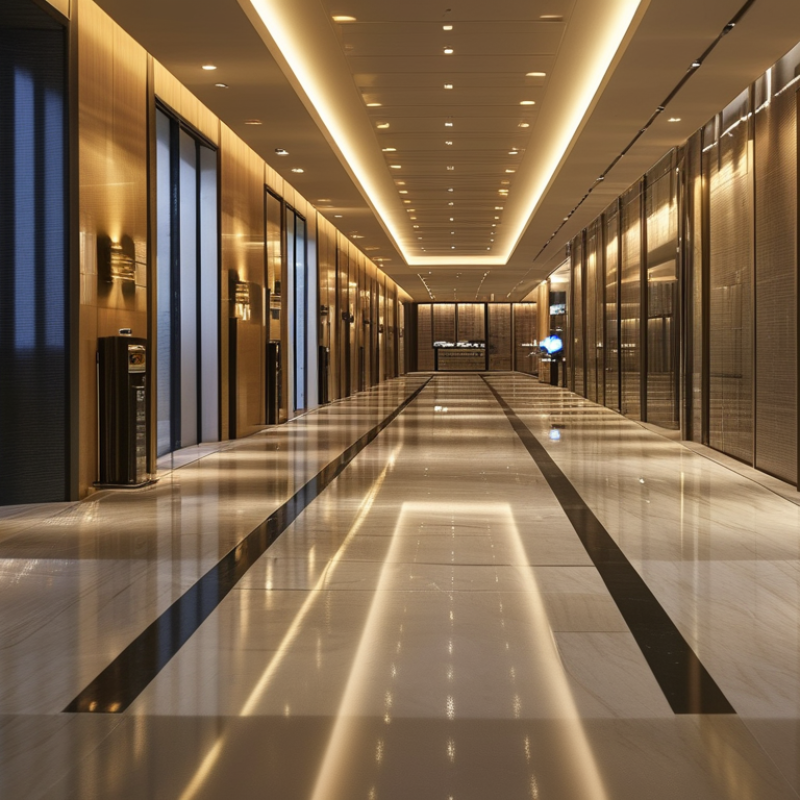
Before requesting lighting quotations, define the space, task, and expected visual result. Record room dimensions, ceiling height, mounting position, and surface colors. Note whether users read, inspect products, move through aisles, or relax there. These details shape illuminance, beam angle, glare control, and color rendering. A warehouse aisle needs different planning from a hotel corridor. Measure daylight at different hours, not only during one site visit. Light changes.
Create a project specification sheet with target illuminance, color temperature, CRI, dimming method, IP rating, operating hours, and control requirements. Include input voltage, frequency, emergency behavior, and acceptable lumen depreciation. For outdoor projects, state wind exposure, moisture, and ambient temperature. Ask suppliers for photometric files, test reports, wiring diagrams, and sample units. Review tolerances for dimensions and finish. A two-millimeter error can complicate installation. I once treated a sample as representative, but the production finish differed slightly. That mistake required a clearer approval process.
Define packaging, labeling, spare parts, inspection stages, and delivery milestones before placing an order. Specify how samples will be tested under actual mounting conditions. Check documentation against the destination market’s applicable electrical and safety requirements. Requirements vary by location. Avoid vague terms such as “bright,” “premium,” or “energy-saving.” Replace them with measurable values and acceptance criteria. Keep a revision history, because small changes to drivers or lenses can alter performance. Leave room for questions. A strong specification is precise, but never pretends every site behaves perfectly.
Compare Lighting Technologies, Features, and Applications
Global lighting sourcing starts with a technology comparison, not a catalogue price.
LED remains the practical baseline because it offers high efficacy, long service life, and flexible control. The U.S. Department of Energy’s Energy Savings Forecast of Solid-State Lighting estimates that LED adoption could save 5.1 quadrillion Btu annually by 2035. That figure supports large-scale investment, but performance still depends on heat management, driver quality, and operating temperature.
Compare the application carefully. High-bay LED fixtures suit warehouses needing strong illumination and motion controls. Tunable white systems support offices, although their extra controls can increase commissioning costs. OLED panels provide soft, low-glare light for hospitality spaces, but their lower output may limit industrial use. Fluorescent products can still fit certain retrofit projects, yet disposal rules and declining availability require closer sourcing checks. Measure the light, not just the wattage.
A lumen figure alone misled me once.
A sample fixture looked efficient, but its narrow beam created dark aisles. Review delivered lumens, beam angle, color rendering, flicker, ingress protection, and warranty conditions together. The U.S. DOE’s 2023 Solid-State Lighting R&D Opportunities report identifies efficacy, reliability, and controllability as continuing development priorities.
For international purchasing, verify test methods against recognized standards, including IEC 60598 and IEC 62471. Also compare voltage ranges, emergency compatibility, spare drivers, and regional certifications.
The International Energy Agency and UNEP have reported that lighting historically represented about 15% of global electricity use, so small specification errors can scale quickly. My checklist still needs revision when applications change.
Review Costs, Trade Regulations, and International Shipping Factors
How to Choose Lighting Products for Global Sourcing?
Lighting selection starts with the landed cost, not the factory quotation.
The International Energy Agency estimates that lighting consumes about 15% of global electricity. Efficient products may cost more initially, but they can reduce operating expenses for commercial buyers. Compare unit price, tooling, testing, packaging, duties, insurance, and expected failure rates. A low quotation can become expensive after certification changes.
Trade regulations require close product review. Check electrical safety, electromagnetic compatibility, energy labeling, hazardous-substance limits, and recycling obligations in every destination market. European Union rules, including RoHS, WEEE, and ecodesign requirements, may affect components and documentation. Customs codes also matter. A small classification error can delay clearance or change the duty rate. The World Trade Organization’s tariff data shows that applied duties vary widely across product categories and economies. Do not rely on supplier assumptions.
Shipping deserves physical planning. UNCTAD reports that maritime transport carries over 80% of global merchandise trade by volume. Lighting cartons need protection against crushing, moisture, and vibration. Calculate cubic volume carefully; large shades can consume more container space than their value suggests. The World Bank’s 2023 Logistics Performance Index emphasizes reliability and shipment timeliness. Build buffer days into launch plans. I have seen sourcing schedules fail because testing finished late, not because production stopped. That mistake is easy to repeat. Recheck every certificate before booking cargo.
Test Samples and Finalize a Reliable Global Sourcing Plan
Choosing lighting products for global sourcing begins with disciplined sample testing. The U.S. Department of Energy reports that LED products can use at least 75% less energy and last up to 25 times longer than incandescent lamps. These figures are useful, but supplier claims still require verification. Request samples from at least three factories. Check luminous flux, color temperature, power consumption, flicker, heat, and dimming performance. Test each sample for 500 to 1,000 hours when possible. Record results with photographs and instrument readings.
The International Energy Agency identifies lighting efficiency as an important part of worldwide electricity savings. However, efficiency alone cannot define a reliable sourcing decision. Ask for LM-80 data, safety documentation, material declarations, and production quality records. Confirm whether the factory can reproduce the approved sample. A beautiful prototype may hide weak soldering or unstable drivers. That happened in one trial project. The sample passed inspection, but the second production batch showed visible color differences. The approval process was too narrow.
Tips: Build a weighted scorecard before negotiation. Give separate scores for performance, compliance, warranty support, lead time, minimum order quantity, and factory communication. Keep one approved sample as the reference unit. Define acceptable tolerances in writing. Recheck samples after packaging and transport. The IEA’s Energy Efficiency 2023 report also highlights the value of efficient equipment across buildings, yet real savings depend on installation and operating conditions. Leave room for correction. A sourcing plan should include a backup supplier, inspection checkpoints, replacement terms, and realistic logistics buffers. (Sources: U.S. Department of Energy, LED Basics; International Energy Agency, Energy Efficiency 2023.)
How to Choose Lighting Products for Global Sourcing?
Test Samples and Finalize a Reliable Global Sourcing Plan
The scorecard weights the key checks used before a lighting product enters a global sourcing plan. Electrical safety and photometric performance should be verified through recognized laboratory testing, while lead time, defect rate, packaging, and documentation help reduce supply-chain risk.