How to Choose the Best Home Lighting in 2026?
Choosing the best lighting for a home in 2026 is not about buying the brightest bulb or following a trend. It begins with noticing how each room is used. A kitchen needs clear light over counters; a reading chair benefits from a focused lamp; a hallway needs comfortable, even illumination. Daylight matters, too. A north-facing room can feel very different from a sunlit one.
Lighting pioneer Richard Kelly described three useful effects: “focal glow, ambient luminescence, and play of brilliants.” His framework still helps homeowners balance practical light with atmosphere. In this guide, we’ll look at room-by-room planning, bulb brightness, color temperature, color rendering, dimmers, and fixture placement. We’ll also consider energy use and glare, because a beautiful pendant can still cast shadows on the work surface. Small details matter.
Start with the task, then choose the fixture. Check product specifications rather than relying on packaging claims alone. For kitchens and bathrooms, confirm that fittings suit their location and exposure; ask a qualified electrician when installation or wiring is uncertain. A well-planned light home should feel useful in the morning and welcoming at night, without relying on one harsh ceiling bulb. There is no perfect formula. I still think lighting plans can look convincing on paper and feel wrong after sunset. That is why testing a lamp’s position and dimming range in the actual room is worth the effort.
Assess Your Home’s Lighting Needs and Room Functions
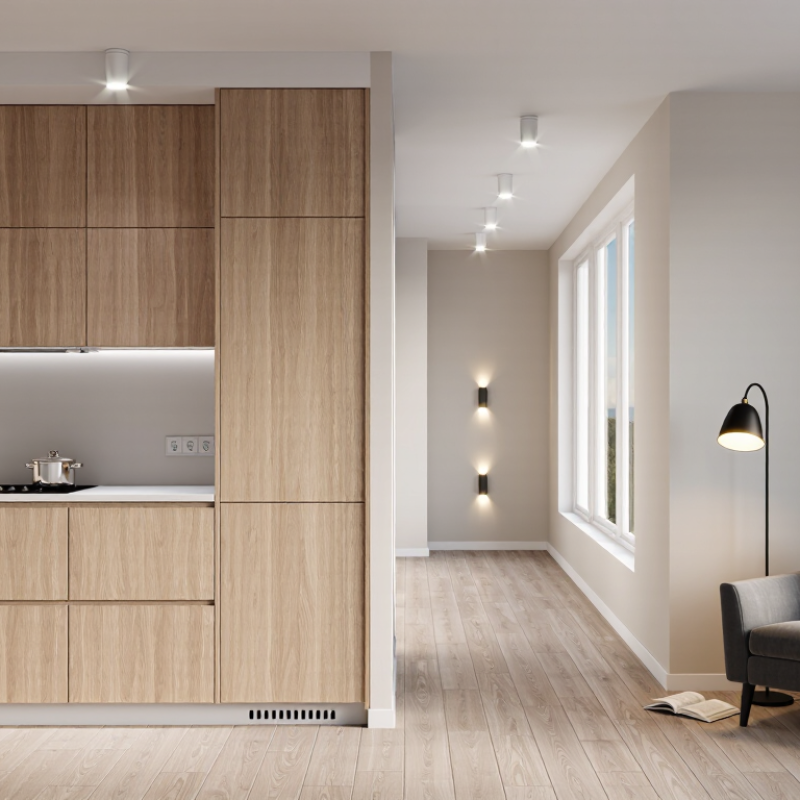
Before choosing fixtures, map what each room needs you to do. A kitchen may need bright, even light over counters, while a bedroom benefits from softer bedside lighting. Note where daylight falls, where shadows collect, and which switches are inconvenient. Start with use. The U.S. Energy Information Administration’s 2020 Residential Energy Consumption Survey estimates that lighting accounts for about 4% of household energy use. That share may seem modest, but long hours and inefficient bulbs can add up.
In a work area, aim for clear light on the task, not glare on a screen. At a dining table, a pendant can focus light without illuminating every corner equally. Add lamps where overhead fixtures leave faces or book pages in shadow. Night lighting matters. Consider who uses the room, too: older adults may need stronger, more even illumination, while children benefit from reachable controls. These are starting points, not fixed rules; dark walls and glossy surfaces can change how light feels.
Check bulb brightness, color appearance, and dimming compatibility before buying. The U.S. Department of Energy’s LED Lighting guidance says residential LEDs use at least 75% less energy and can last up to 25 times longer than incandescent bulbs. Still, efficiency alone does not make a room comfortable. A common planning mistake is choosing one bright ceiling fixture for everything. Test light at the actual reading chair or countertop, then adjust; a little rethinking is often cheaper than replacing the whole setup.
How to Choose the Best Home Lighting in 2026? — Assess Your Home’s Lighting Needs and Room Functions
| Room or Area |
Main Lighting Needs |
Typical Illuminance |
Suggested Color Temperature |
Color Rendering |
Practical Lighting Plan |
| Living Room |
Relaxing, conversation, and occasional reading |
About 100–200 lux for general use; 300–500 lux at a reading task |
2700–3000 K |
CRI 80 or higher; consider 90 or higher for art and richly colored furnishings |
Combine ceiling or indirect ambient light with floor or table lamps. Use dimming to shift from social lighting to quieter evening light. |
| Kitchen |
Food preparation, cooking, dining, and general circulation |
About 150–300 lux for general lighting; 300–500 lux on counters and work surfaces |
3000–4000 K |
CRI 80 or higher; 90 or higher can help colors appear more natural during food preparation |
Use broad, even ambient lighting and task lights over counters. Position work-surface lights to reduce shadows from the person using the counter. |
| Bedroom |
Getting dressed, relaxing, and reading in bed |
About 100–200 lux for general use; 300–500 lux for reading or detailed tasks |
2700–3000 K |
CRI 80 or higher |
Choose dimmable ambient lighting with separately controlled bedside lamps. Add brighter, well-directed light near wardrobes or dressing areas. |
| Bathroom |
General visibility, grooming, and mirror use |
About 200–300 lux for general lighting; 300–500 lux at the mirror |
3000–4000 K |
CRI 90 or higher is useful for accurate appearance of skin tones and makeup colors |
Use even mirror lighting from both sides or a well-designed light above the mirror. Select fixtures rated for the moisture conditions of their installation location. |
| Home Office |
Reading, writing, computer work, and video calls |
About 300–500 lux on the desk, adjusted for the task and available daylight |
3000–4000 K |
CRI 80 or higher; 90 or higher may be preferable for color-sensitive work |
Pair general room lighting with an adjustable desk lamp. Place lights to limit reflections on screens and avoid strong contrast between the screen and surroundings. |
| Hallway and Stairs |
Safe movement and clear visibility of steps, edges, and obstacles |
About 50–100 lux, with even coverage and brighter light where needed for safe movement |
2700–3500 K |
CRI 80 or higher |
Use evenly spaced ceiling or wall lights. Consider occupancy sensors where automatic switching is helpful, and avoid glare on stair treads. |
| Dining Area |
Eating, conversation, and occasional table activities |
About 100–200 lux for a comfortable general atmosphere; add task light for detailed activities |
2700–3000 K |
CRI 80 or higher; 90 or higher can improve the appearance of food and table settings |
A dimmable pendant or other focused fixture can light the table; add separate ambient lighting to keep the rest of the room comfortable. |
Illuminance values are practical starting ranges, not fixed requirements. Actual needs vary with room layout, surface colors, daylight, vision, and personal preference. Lux refers to light falling on a surface; use the task surface as the reference point when comparing lighting levels.
Understand Ambient, Task, and Accent Lighting
How to Choose the Best Home Lighting in 2026?
A comfortable room rarely depends on one bright ceiling fixture. Layer ambient, task, and accent lighting to serve different needs. Ambient light sets the overall brightness; task light makes specific work easier; accent light draws attention to artwork, shelves, or textured walls. At a kitchen counter, for example, combine soft ceiling light with a focused, low-glare fixture. A small lamp beside a reading chair can prevent the whole room from feeling overly bright. Keep it practical.
Choose bulbs by brightness, color appearance, and dimming compatibility, not wattage alone. The U.S. Department of Energy reports that LEDs use at least 75% less energy than incandescent lighting and can last up to 25 times longer. The International Energy Agency estimates lighting accounts for about 15% of global electricity use. These figures make efficient sources worthwhile, but placement matters too: a powerful bulb aimed at a glossy countertop can create uncomfortable glare.
Accent light should add depth, not visual clutter. Try a warm, shaded lamp near a bookcase, then check how it looks after dark. Check after dark. I still find it easy to over-light a room when choosing fixtures in a showroom. Test each layer separately, and use dimmers where compatible. A dimmer cannot fix poor positioning, but it can make a useful setup more flexible.
Compare Light Sources, Color Temperatures, and Efficiency
How to Choose the Best Home Lighting in 2026?
Compare light sources by how they perform in the room, not just by the label. LEDs suit most everyday fixtures because they use less electricity and last longer than incandescent bulbs. The U.S. Department of Energy’s LED Lighting guidance reports that LEDs use at least 75% less energy and can last up to 25 times longer. That can reduce replacements, though actual lifespan depends on heat, fixture design, and hours of use. Check the bulb’s stated lumens for brightness and its compatibility with dimmers. A bright kitchen ceiling light may still feel harsh.
Color temperature changes the mood. Around 2700–3000 kelvin gives bedrooms and living rooms a warm, softer appearance; 3500–4000 kelvin often looks more neutral over counters or desks. These are starting points, not rules. Paint colors and daylight can shift how a bulb looks, so test one in the actual room before buying a full set. Also compare efficacy, measured in lumens per watt: more lumens per watt means more light for the same energy. The DOE’s 2022 Lighting Market Characterization documents the growing role of LEDs in U.S. lighting, but efficiency alone cannot tell you whether a space will feel comfortable. Sometimes, less light works better. A useful choice balances brightness, color, energy use, and the small annoyance of glare.
Choose Fixtures and Smart Controls for Each Room
Choose fixtures by task, then adjust brightness for comfort. Kitchen counters need focused, shadow-conscious light; place fixtures so your hands do not block the beam. In living rooms, combine a ceiling fixture with a shaded lamp near reading chairs. Bedrooms usually feel calmer with warm-toned, dimmable light and switches reachable from the bed. Small details matter. The International Energy Agency’s Energy Efficiency 2023 report estimates that lighting accounts for about 15% of global electricity use. The U.S. Department of Energy says LEDs use at least 75% less energy and last up to 25 times longer than incandescent bulbs. Treat those figures as broad comparisons, not a promise about every product or household.
Smart controls should solve a real room problem. Use dimmers where brightness changes through the day, and occupancy sensors in closets or utility rooms where lights are often left on. For daytime rooms, daylight sensors can reduce artificial light when sunlight reaches the work surface. Set schedules around actual routines, not an idealized timetable; a hallway sensor that switches off too quickly can be irritating. One caveat: app-based control is not automatically more convenient. Keep a familiar wall switch, check that controls work with the chosen fixture, and test nighttime brightness before settling on settings.
Check Installation Requirements, Safety, and Long-Term Costs
How to Choose the Best Home Lighting in 2026?
Before choosing a fixture, check what your home can safely support. Look at the ceiling box, wiring, and fixture weight, especially when replacing a heavy pendant. Measure ceiling height and nearby doors; a low-hanging shade can become an everyday annoyance. For bathrooms, porches, or other damp areas, confirm the fixture is rated for that location. Requirements vary, so ask a qualified electrician if wiring looks damaged or unfamiliar. A quick guess is not worth the risk.
Long-term costs include more than the purchase price. Compare energy use, expected lamp life, and replacement costs. LED lighting often uses less energy, but check whether its light output and color suit the room. If you want dimming, verify that the lamp, fixture, and dimmer work together. Compatibility is easy to overlook. Smart controls can add convenience, yet may cost more to replace or maintain. I would not choose them for every room.
Tips: Take a photo of the existing wiring before shopping, but never handle exposed wires while power is on. Keep the measurements and product specifications together. Test the light’s brightness in the room when possible; a showroom can make warm light look quite different. Allow a little budget for installation.
How to Choose the Best Home Lighting in 2026
Estimated annual electricity cost for lamps producing roughly 800 lumens. Lower operating costs can help offset a higher purchase price.
Assumptions: 3 hours of use per day and electricity at $0.16 per kWh. Approximate power use: LED 9 W, CFL 15 W, halogen 43 W, and incandescent 60 W. Electricity costs exclude bulb purchase and replacement costs. Before buying, check fixture and dimmer compatibility, bulb size, and maximum-wattage limits; switch off power before installation.