What Are the Top Types of Industrial Lights in 2026?
Industrial lighting in 2026 is not a one-fixture decision. A distribution center with high ceilings needs different coverage from a machine shop with precise visual tasks. High-bay and low-bay LEDs serve broad overhead areas, while task lights put focused illumination on benches and inspection stations. Floodlights cover yards and loading zones. Vapor-tight fixtures suit damp, dusty locations when their ratings match the conditions. Small details matter: glare on a polished surface can hide a flaw, even when the room looks bright.
Lighting designer and engineer James R. Benya’s work points to a practical rule, paraphrased: “Choose the fixture for the task and site conditions, not its label alone.” That is a useful starting point, not a substitute for a lighting plan. In 2026, efficient LEDs, sensors, and connected controls can help reduce wasted light, but they still need careful setup. Controls that dim at the wrong time can frustrate workers. It happens.
This guide explores the top types of industrial light, their typical applications, and the trade-offs buyers should examine. We’ll look at light distribution, mounting height, color quality, durability, and maintenance access. A fixture may look ideal on a specification sheet. On site, shadows, dust, and awkward mounting can change the result. That deserves more attention than it often gets.
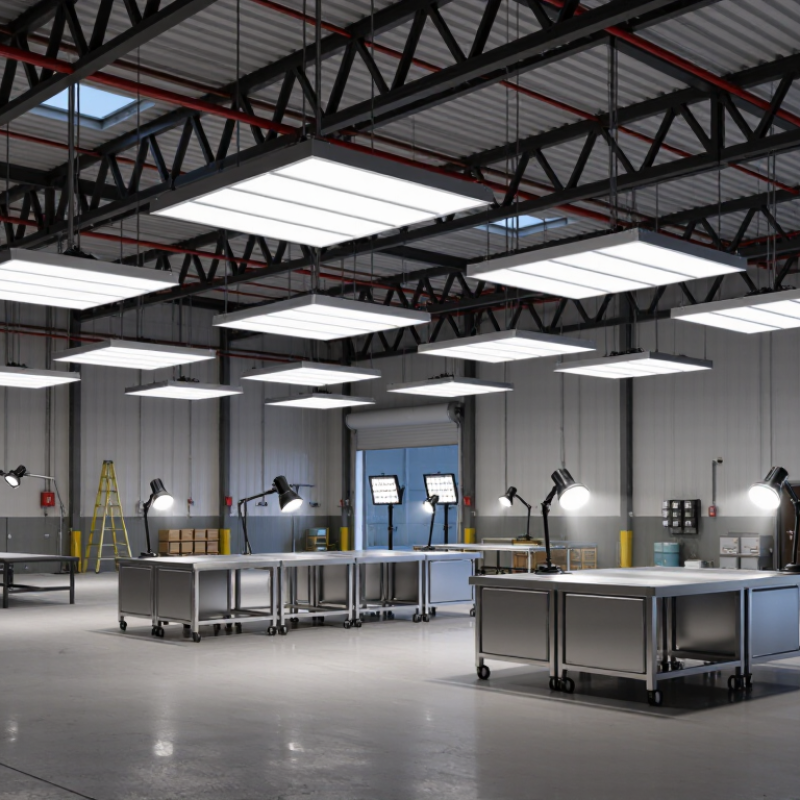
How Industrial Lighting Is Classified in 2026
How Industrial Lighting Is Classified in 2026
Industrial lighting is classified by where it is used, how it mounts, and how it directs light. High-bay fixtures suit tall warehouses, while low-bay models serve lower ceilings. Linear fixtures illuminate long production lines. Floodlights cover yards and loading areas. The categories overlap, which can make comparisons confusing.
Classification also considers enclosure protection, controls, and light distribution. A sealed, vapor-resistant fixture may suit washdown areas; a high ingress-protection rating helps indicate resistance to dust and moisture. Check the actual rating and installation conditions, not just the product label. The U.S. Department of Energy’s 2020 U.S. Lighting Market Characterization estimated that LEDs made up about 48% of installed U.S. lighting. This is a useful baseline, not a 2026 market share. In practice, efficiency matters, but glare, mounting height, and maintenance access matter too.
Tips: Start with ceiling height, task, and exposure to dust or water. Then compare light distribution and controls. Measure at the work surface; a bright ceiling can still leave a dim bench. Recheck the layout after installation. Even a careful plan can miss shadows from machinery.
Top Types of Industrial Lighting in 2026
Typical LED luminaire efficacy ranges by industrial light type (lumens per watt)
High-bay and low-bay lights are commonly used in tall and mid-height spaces, while linear sealed fixtures suit production areas and wet or dusty environments. Floodlights illuminate outdoor areas, and hazardous-location fixtures are designed for classified environments. Efficacy ranges are approximate and vary by model, optics, operating conditions, and required certifications; they are not category standards.
High-Bay and Low-Bay Lights for Large Indoor Spaces
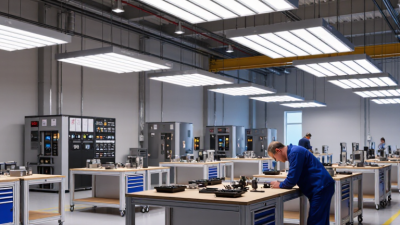
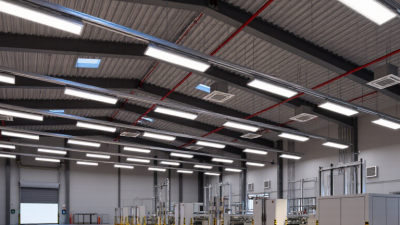
High-bay and low-bay fixtures remain practical choices for large indoor spaces in 2026. High-bay lights suit ceilings roughly 20 to 40 feet high, such as warehouse floors, gymnasiums, and production halls. Their focused optics help direct light toward work surfaces instead of wasting it above the floor. In a warehouse, narrow-beam fixtures can illuminate long aisles, while wider beams may work better over open areas. Uniformity matters. Dark gaps between fixtures can make labels and floor markings harder to see.
Low-bay lights generally serve spaces with ceilings around 10 to 20 feet high, including workshops, smaller warehouses, and service areas. Their broader distribution can reduce harsh bright spots on benches and equipment. Look at mounting height, spacing, and the task below each fixture, not wattage alone. A shiny floor or metal worktop can create uncomfortable glare. It is easy to overlook that detail.
For either type, compare measured light output, distribution, color quality, and energy use. A lighting plan based on the room’s dimensions is more dependable than choosing fixtures by appearance. Dust, moisture, and temperature also matter; check the fixture’s ratings against actual site conditions. Controls such as occupancy sensors can help in intermittently used aisles. Still, every building behaves differently, and a layout that looks sound on paper may need adjustment after installation.
Task, Linear, and Panel Lights for Work Areas
What Are the Top Types of Industrial Lights in 2026?
Task, Linear, and Panel Lights for Work Areas
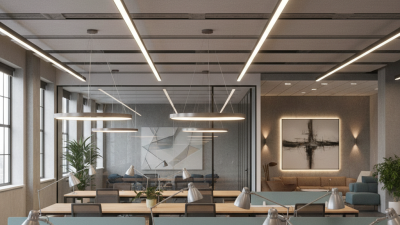
Task, linear, and panel lights serve different work-area needs. Task lights put focused illumination on inspection benches, machine controls, and detailed assembly. They can help workers see fine marks without brightly lighting every nearby surface. Aim them carefully; a visible hotspot can create glare on metal parts. Small details matter. Linear lights suit long benches, production lines, and aisles, where continuous rows can reduce dark gaps. Their spacing and mounting height matter as much as output. A tidy row can still leave shadows beneath shelves or equipment.
Panel lights spread softer, more even light across rooms used for packing, planning, or inspection. They are often a sensible choice where broad coverage matters more than a sharply focused beam. The U.S. Energy Information Administration’s 2018 Commercial Buildings Energy Consumption Survey reports that lighting accounts for about 17% of commercial building electricity use. The International Energy Agency’s 2023 Buildings report says buildings use around 30% of global final energy. These figures are not industrial-lighting benchmarks, but they show why efficient layouts and controls deserve attention. Match fixtures to the task, then check glare, shadows, and light levels at the actual work surface. I’d still question any plan based on fixture count alone.
What Are the Top Types of Industrial Lights in 2026? — Task, Linear, and Panel Lights for Work Areas
| Light type |
Typical LED power |
Typical light output |
Common color options |
Typical mounting |
Best suited for |
Key selection consideration |
| Task lights |
5–30 W |
About 500–3,000 lm |
Typically 3,000–5,000 K; CRI 80+ is common |
Bench, machine, wall, or articulated-arm mounting |
Inspection, assembly, machine operation, and other close-up work |
Choose adjustable positioning and suitable glare control; verify the required task illuminance. |
| Linear lights |
30–150 W |
About 4,000–22,000 lm |
Typically 4,000–5,000 K; CRI 80+ is common |
Suspended, surface-mounted, or continuous-row installation |
Production lines, workshops, warehouses, and long work areas |
Match the distribution and spacing to ceiling height, aisle layout, and uniformity needs. |
| Panel lights |
30–60 W |
About 3,000–7,000 lm |
Typically 3,500–5,000 K; CRI 80+ is common |
Recessed grid, surface-mounted, or suspended |
Inspection rooms, control areas, clean workspaces, and general work-area lighting |
Check ceiling compatibility, diffuser characteristics, and glare performance. |
Note: Values are representative ranges for commercial LED luminaires, not guaranteed specifications. Actual output, power, color quality, and suitability vary by fixture design and installation. Confirm lighting levels against the requirements of the work and applicable local standards.
Floodlights and Vapor-Tight Fixtures for Outdoor and Harsh Sites
Outdoor floodlights are suited to yards, loading areas, and equipment pads where broad, dependable coverage matters. A narrow beam can reach a gate or distant wall; a wider distribution can reduce dark gaps across a work zone. Mounting height and aiming angle affect both coverage and glare. Small details matter.
Before choosing output, consider where shadows fall when trucks, containers, or machinery move through the site. A bright fixture can still leave a worker’s task poorly lit. Review the layout after installation, if possible, and adjust aiming rather than simply adding more fixtures.
Vapor-tight fixtures protect internal components from dust, moisture, and routine washdown when their construction and ratings suit the actual conditions. They are often used in covered service bays, food-preparation areas, and damp utility spaces. Not all are right outdoors. Check the specified ingress protection, ambient-temperature range, mounting method, and cleaning requirements before selection. Gaskets and lenses also need periodic inspection; a cracked lens or poorly seated seal can undermine protection. One trade-off is easy to miss: a sealed fixture may retain heat differently, so confirm its thermal limits in hot, enclosed locations. Good choices come from matching the fixture to the site, not choosing by wattage alone.