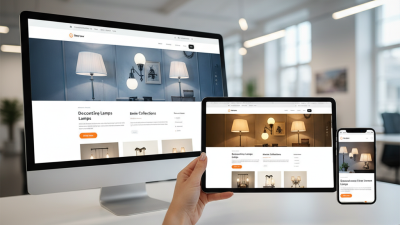


Finding reliable home and lighting suppliers in 2026 takes more than comparing catalog prices. Buyers need to check product consistency, safety documentation, realistic lead times, and after-sales support. The International Energy Agency estimates that lighting accounts for about 15% of global electricity use and 5% of greenhouse-gas emissions. Those figures make efficiency and product quality more than marketing details. The U.S. Department of Energy also notes that LEDs use substantially less energy and last much longer than traditional incandescent bulbs. Small specifications matter. A sample’s color temperature, color-rendering index, and finish should match the production order, not just the showroom display.
Good sourcing starts with evidence. Ask suppliers for current test reports, warranty terms, production capacity, and references from comparable projects. Request samples from the actual production line, then inspect them under the kind of light and room conditions your customers will use. Lighting researcher Russell Foster has described light as “the most powerful synchronizer of the human circadian system.” His point is a useful reminder: fixtures affect everyday comfort, not only appearance. Yet supplier checks have limits. A neat document pack cannot reveal every factory-floor problem, and a promising sample cannot guarantee consistent future batches. Look for clear answers, traceable records, and a willingness to discuss limitations. That matters. This guide outlines practical ways to assess suppliers, compare offers fairly, and reduce avoidable sourcing surprises.

How to Find Reliable Home Lighting Suppliers in 2026?
Set Project Requirements Using DOE’s Benchmark of 75% Lower LED Energy Use
The U.S. Department of Energy reports that LEDs use at least 75% less energy than incandescent lighting. Treat this as a comparison benchmark, not a promise that every project will cut its bills by exactly 75%. Before contacting suppliers, record the existing bulb types, wattages, room sizes, and typical daily operating hours. A kitchen light used for six hours needs a different specification from a hallway light switched on briefly.
Translate the benchmark into measurable requirements. For example, ask suppliers to match the useful light output of existing lamps while lowering wattage, and request product data showing lumens, color temperature, color rendering, and dimmer compatibility. Check that proposed fixtures suit the room: a warm-toned lamp may feel comfortable in a bedroom but look dull above a work surface. Ask for written energy calculations based on your actual usage. Small details matter.
Request sample units and test them in the intended rooms before placing a large order. Check for flicker, uneven light, glare on countertops, and changes in color after dimming. A polished specification can still miss how a room feels at night; I would leave space for that real-world check. Compare warranty terms and replacement availability, too. A supplier should explain assumptions clearly, not just repeat the 75% figure.
A reliable lighting supplier should provide evidence for the exact luminaire you plan to buy, not just a certificate for a similar-looking product. Ask for its UL or ETL listing details, then verify the model and manufacturer in the certifier’s public directory. Check that the mark appears on the product label, and confirm any limits on installation, such as indoor use or mounting conditions. A listing is useful only when it matches the shipped configuration.
Look beyond the logo. Request test documentation against the applicable IEC 60598 requirements, including relevant parts for the luminaire type. Check the standard edition, tested model, and laboratory details; IEC 60598 is a safety standard, not itself a product certification mark. A desk lamp and a recessed fixture may require different checks. Ask how wiring, insulation, temperature rise, and mechanical strength were assessed. Then compare the report with a production sample. Small changes matter.
Paper can look convincing. I have seen specifications drift between a sample and a bulk order, sometimes through a changed driver or cable. Ask the supplier to explain any differences in writing and to notify you before substitutions. If answers are vague, pause. Not every supplier keeps records equally well, and one missing detail may deserve a second look.
When comparing home lighting suppliers, ask for an IES LM-79 report for the exact finished luminaire. It measures electrical and photometric performance under stated test conditions. Check input watts, efficacy, light output, color temperature, color rendering, and beam distribution. Do the figures match the product sheet? A mismatch deserves an explanation. The paperwork can look convincing. Confirm the report identifies the same model and configuration you plan to buy, and note the laboratory and test date. A warm kitchen downlight and a cooler hallway fixture may have different needs, even when their wattage is similar.
For LED lifetime claims, request LM-80 data for the relevant LED package, module, or array, plus the supplier’s TM-21 projection. LM-80 records lumen maintenance over time at specified temperatures and drive currents; TM-21 uses those results to project performance. It does not directly prove that a complete fixture will last for the stated number of hours. Check that the tested LED type and operating conditions resemble those inside the proposed fitting. Look closely at case temperature, test duration, and the projection method. These details are easy to overlook. Even experienced buyers can treat a projected figure as a guarantee; it is better read as evidence with limits. Ask the supplier to explain any gap between the test data and the installed product.
Use this evidence-based checklist to compare suppliers. Request documents for the exact product configuration being quoted, and verify report details with the issuing laboratory when needed.
| Evaluation Area | Evidence to Request | What to Check | Reliable Evaluation Rule | Review Status |
|---|---|---|---|---|
| Product identity and configuration | Datasheet, quotation, product label, and test-sample description | Model or SKU, wattage, CCT, CRI, optics, driver, dimming method, and other options match the quoted product. | Confirm that the tested configuration is the same as the purchase configuration. Ask for clarification if a report covers a different model or component combination. | To verify |
| Photometric and electrical performance | Complete IES LM-79 test report for the finished solid-state lighting product | Measured input power, luminous flux, efficacy, chromaticity, and other reported photometric or electrical results; test conditions and product identification. | LM-79 reports characterize measured performance under stated test conditions. Compare reported results with the supplier’s declared specifications and applicable project requirements. | To verify |
| Report authenticity and laboratory competence | Laboratory name, report number, issue date, test details, and accreditation information if provided | Report pages are complete and internally consistent; the laboratory can confirm the report. If accreditation is claimed, check that the accreditation scope covers the relevant testing. | Request confirmation from the issuing laboratory when a report cannot be authenticated. Do not treat an accreditation logo alone as proof that a specific test is within scope. | To verify |
| LED source lumen maintenance | IES LM-80 report for the LED package, array, or module used in the product | Tested source identification, operating conditions, temperatures, drive current, test duration, and lumen-maintenance results. | Match the LM-80 data to the actual LED source and relevant operating conditions. LM-80 measures lumen maintenance of LED sources; it is not a whole-luminaire lifetime test. | To verify |
| Lumen-maintenance projection | IES TM-21 calculation or report using applicable LM-80 data | Input LM-80 dataset, selected temperature and current, calculation method, projection period, and stated assumptions. | Check that the projection uses relevant LM-80 data and follows the applicable TM-21 method and projection limits. A projected lumen-maintenance value is not a guaranteed service life. | To verify |
| Thermal conditions in the finished product | Thermal measurement details or supporting engineering documentation | LED case or measurement-point temperature in the luminaire, installation conditions, ambient conditions, and whether the tested configuration matches the product. | Compare the product’s measured operating conditions with the conditions used to select LM-80 data for a TM-21 projection. Ask how thermal performance changes in enclosed or restricted installations. | To verify |
| Color quality and consistency | LM-79 chromaticity results and product color specification | Reported chromaticity coordinates, CCT, and color-rendering data where included; consistency across the offered product range. | Compare test results with the declared CCT and CRI requirements for the intended application. Request clarification on production color tolerances if they are not specified. | To verify |
| Warranty and service-life claims | Written warranty terms, exclusions, and claim process | Warranty duration, covered components, operating conditions, remedy, and the party responsible for handling claims. | Review warranty terms separately from LM-80/TM-21 projections. A lumen-maintenance projection does not by itself establish the warranty period or cover driver and other component failures. | To verify |
| Production consistency and change control | Written confirmation of production components and notification policy for changes | Whether LED source, driver, optics, materials, or manufacturing location can change after testing without customer notification. | Ask the supplier to explain how production changes are controlled and how test evidence is kept aligned with delivered products. | To verify |
Important: LM-79 describes measured performance of a finished solid-state lighting product under stated test conditions. LM-80 provides lumen-maintenance test data for LED sources, while TM-21 uses applicable LM-80 data to project lumen maintenance. These documents address different questions and should be reviewed together with product-specific information, warranty terms, and installation conditions.
When comparing home lighting suppliers in 2026, treat long LED life claims as a starting point, not a guarantee. The U.S. Department of Energy has reported that LEDs can last up to 25 times longer than incandescent lamps. That comparison describes potential performance, not every product or installation. Heat, ventilation, switching frequency, and driver quality can affect real-world life. Ask suppliers for rated hours and the conditions used to test them. Then compare those figures with the written warranty.
Read the fine print. Does coverage include the lamp, driver, and labor, or only a replacement unit? Check the warranty period, proof-of-purchase requirements, and what happens if a fixture fails early. A 25,000-hour rating sounds reassuring, but it does not automatically mean a supplier will honor a claim. Request the warranty document before ordering, and keep a copy with your invoice. Look for clear contact details and a straightforward claims process. Small details matter.
A mismatch deserves a question. If a product promises decades of use but has a short warranty, ask why. The answer may be reasonable, or it may reveal gaps in support. Supplier comparisons can feel tedious. Still, a few minutes spent checking terms may prevent a dark hallway and an unexpected replacement cost.
Before ordering, ask for a working sample from the same product range you plan to buy. Check the finish under both warm and cool light. Look for uneven coating, loose fittings, flickering, or heat around the driver after a reasonable test period. Keep notes and photographs. Small details matter. A polished sample can still be hand-selected, so ask how it compares with routine production units. If possible, request several pieces from different cartons. That takes extra time, but it may reveal variation a single sample cannot.
Ask how each batch is identified and linked to its production date, component records, and inspection results. The supplier should explain the process clearly and provide sample records with sensitive commercial details removed. Match the batch codes on cartons and paperwork; gaps deserve a direct question. Delivery records matter too. Review recent dispatch dates, quantities ordered versus received, damage reports, and how delays were handled. A tidy spreadsheet is not proof by itself. Check whether the dates align across invoices, packing lists, and carrier documents. No record system is perfect, and I would not reject a supplier over one missing entry. But repeated discrepancies, vague answers, or promised documents that never arrive are useful warning signs before a large order.