


Buying Imitation Grass across borders is not a simple search for the lowest price. A roll may look lush in a small sample, yet behave differently across a sunny courtyard or a busy play area. Buyers need to compare fiber type, pile height, density, backing, drainage, and expected use. Small details matter. So does the supplier’s ability to explain them clearly.
Synthetic-turf procurement adviser Elena Morris offers a useful reminder: “A good sample shows the color; a good specification explains how the grass will perform.” Treat that as a starting point, not a guarantee. Ask for product data, installation guidance, maintenance requirements, and consistent sample-to-shipment quality checks. Confirm dimensions and packaging before ordering. Photographs help, but they cannot replace written specifications or a physical sample. And a low price can hide trade-offs.
This guide presents ten practical Imitation Grass buying tips for global buyers, from defining the application to assessing suppliers and planning delivery. It also highlights questions worth asking about wear, drainage, UV exposure, and upkeep. Not every buyer will need the same features. That is easy to overlook. Use the tips as a checklist, then compare options against your site conditions and budget. A careful review takes time, and even a careful buyer may need to revisit an assumption.
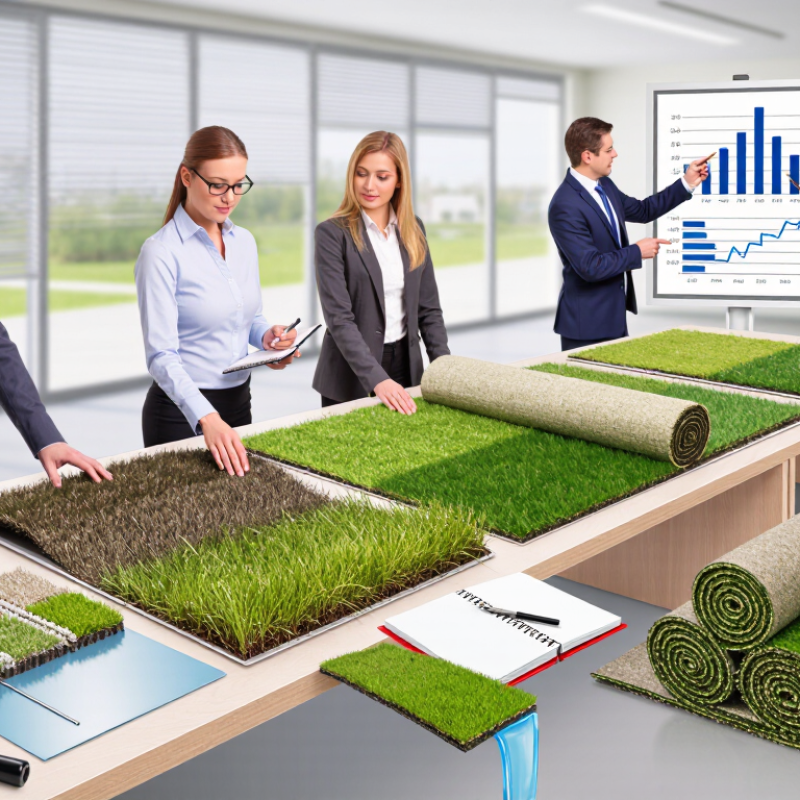
Imitation grass is not one uniform product. Its fibers, pile height, backing, and drainage design affect how it looks and performs. Polyethylene fibers often feel softer and suit lawns, balconies, and decorative areas. Polypropylene may appear in thatch layers or lighter-use products, while nylon fibers are typically firmer and more resilient. Blended constructions combine different properties, so material names alone do not tell the whole story.
Match the turf to its daily use. Short, dense piles can work well for putting areas and spaces with frequent foot traffic. Taller, softer piles may look more natural in gardens, but can show footprints or flatten if heavily used. For pets, check how quickly water drains and whether the backing is easy to rinse. On a sunny balcony, ask about UV resistance and measure the surface carefully before ordering. Small areas are unforgiving.
Samples help, but they can mislead. A hand-sized piece cannot show how a full installation sheds water or changes under repeated walking. Compare the pile direction, color variation, and backing thickness in person. Also consider what lies beneath: uneven paving or poor drainage can cause problems that better-looking fibers will not fix. No option is perfect. A practical choice depends on climate, maintenance time, budget, and the people using the space.
| Buying tip | What to understand | Typical types and uses | Practical buyer check |
|---|---|---|---|
| 1. Match the yarn material to the use | Synthetic turf commonly uses polyethylene (PE), polypropylene (PP), or nylon (polyamide) yarn. Each has different softness, resilience, and cost characteristics. | PE is often selected for lawns and play areas; PP is commonly used for thatch or shorter-pile surfaces; nylon is valued for resilience in demanding applications. | Ask for the yarn composition and confirm that it suits the expected foot traffic and maintenance conditions. |
| 2. Choose pile height for the application | Pile height is the length of the visible yarn above the backing. A taller pile can look fuller but may need more brushing to stay upright. | Shorter piles are often used for putting surfaces and some sports areas; medium piles suit many landscape lawns; taller piles are often chosen for decorative, natural-looking installations. | Compare samples laid flat and brushed, and check the stated pile height in millimetres. |
| 3. Check face weight and stitch construction | Face weight describes the mass of yarn in a defined area; stitch rate and gauge describe aspects of how the turf is tufted. These specifications help compare products but do not alone determine quality. | Higher-density constructions are often considered for busy lawns or play spaces, while lighter constructions may suit low-traffic decorative areas. | Compare products using the same measurement units and review construction details alongside yarn material and backing. |
| 4. Evaluate drainage for the installation site | Water passes through drainage holes and the prepared base. Turf alone cannot compensate for a poorly graded or compacted sub-base. | Perforated backings are commonly used for outdoor landscaping, pet areas, and other installations exposed to rain or wash-down water. | Request the drainage specification and check that the project design includes a suitable permeable base and outlet route. |
| 5. Confirm UV and climate suitability | Sunlight, temperature changes, humidity, and local weather can affect synthetic materials over time. UV resistance depends on the product formulation and supporting test evidence. | Outdoor lawns, rooftops, and sports installations generally need products intended for exterior exposure; indoor decorative turf has different exposure demands. | Ask for relevant test reports and warranty terms, and verify that they cover the intended climate and installation conditions. |
| 6. Decide whether infill is appropriate | Infill is material placed between turf blades. Depending on the system, it can help support the yarn, add ballast, or influence surface performance; not every product requires it. | Silica sand is used in some landscape and sports systems. Other infill options may be selected for specific performance or project requirements. | Confirm the recommended infill type and quantity, and consider maintenance, drainage, and local environmental requirements. |
| 7. Select turf for the intended activity | Landscape turf and sports turf are designed around different priorities. Sports installations may need activity-specific testing and a complete surface system, not just a turf roll. | Common uses include residential gardens, balconies, play areas, putting greens, and sports fields. Product specifications vary by activity and sport. | For play or sport, request applicable safety or performance documentation for the complete installed system. |
| 8. Review backing and seam requirements | The backing holds the tufts and affects installation and drainage. Seams, adhesive, joining tape, and perimeter fixing all contribute to the finished surface. | Outdoor landscape systems often use a backing designed for drainage; indoor or specialized products may use other backing constructions. | Obtain installation guidance and check compatibility of joining materials with the backing and local weather conditions. |
| 9. Request samples and inspect colour | Colour, blade shape, thatch appearance, and texture can look different under varied lighting and viewing angles. Batch variation may also matter for large projects. | Multi-tone yarns are often used to create a more varied landscape appearance; uniform colours may be chosen for some decorative or activity-specific settings. | Review a physical sample outdoors and ask how production batches are controlled for colour consistency. |
| 10. Compare total landed and lifecycle costs | The purchase price is only one part of cost. Freight, duties, installation, base preparation, infill, cleaning, and replacement planning can affect total project spend. | Roll width, roll length, packing, and project quantity influence shipping and installation waste; maintenance needs vary by site and use. | Request dimensions, packing details, warranty conditions, care instructions, and a delivered-cost estimate for the destination market. |
Specifications and suitability vary by product and installation. Verify technical data and local requirements before purchase.