How to Choose the Right Car Light for Your Vehicle?
Choosing the right car light for your vehicle can seem overwhelming. With so many options available, making the right choice is crucial for safety and performance. Expert David Marshall, a leading figure in the car light industry, emphasizes, "Selecting the right car light can transform your driving experience."
Car lights do more than just illuminate the road; they enhance visibility and ensure you are seen. Factors such as brightness, color temperature, and bulb type matter. Mistakes in choosing a car light can lead to poor visibility and potential accidents. It’s essential to understand your vehicle's requirements.
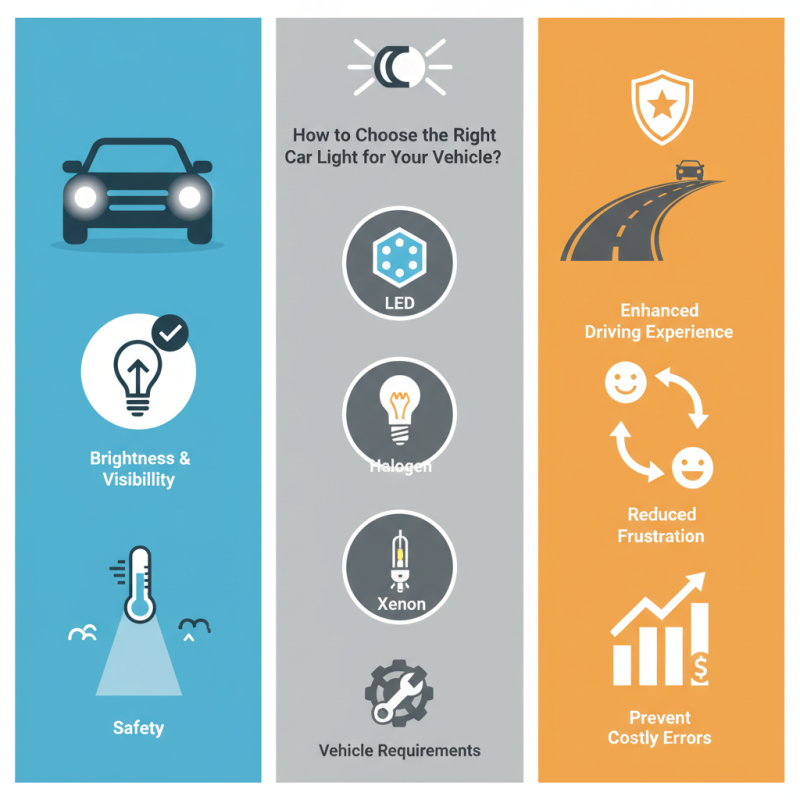
Moreover, many car owners find themselves overwhelmed by choices. LED, halogen, and xenon lights each have unique benefits. Drivers often overlook these details, leading to frustration later. Reflecting on your needs can prevent costly errors. Ultimately, the right car light choice can enhance your driving safety and experience significantly.
Understanding Different Types of Car Lights and Their Functions
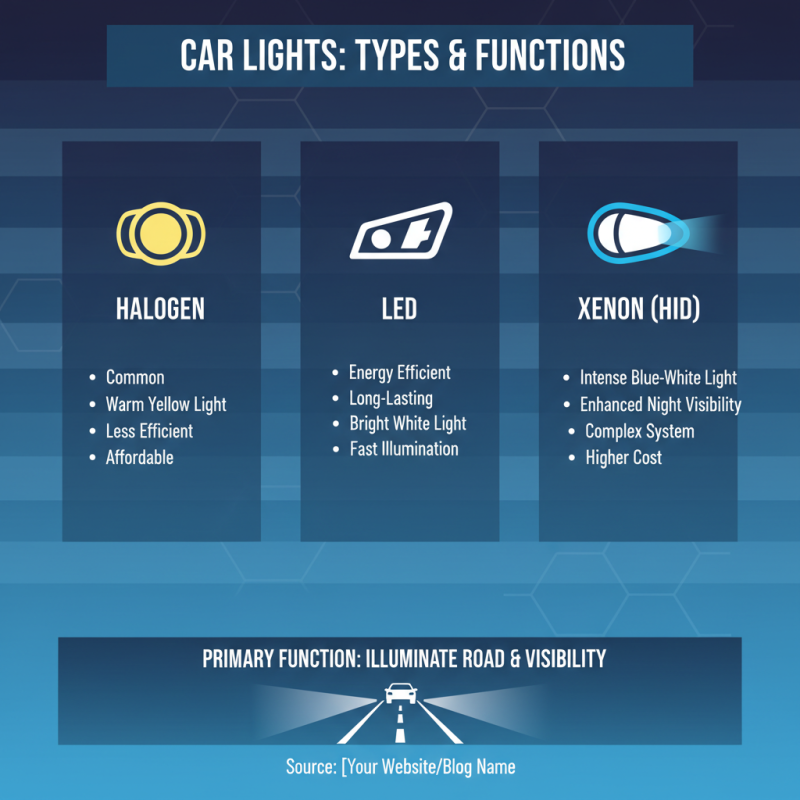
Choosing the right car lights can be confusing. There are various types available, each serving specific functions. Headlights illuminate the road ahead, ensuring visibility at night. They come in halogen, LED, and xenon options. Halogen lights are common but may lack brightness. LED lights are more efficient and last longer. Xenon lights offer a bluish glow, enhancing visibility but can be expensive.
Taillights, on the other hand, signal your presence to other drivers. They become vital in low-visibility conditions. Brake lights communicate your intentions to stop. Some drivers underestimate their importance. Fog lights help minimize glare in foggy conditions. They provide a wider beam but aren’t a substitute for headlights.
Other light types include turn signals and daytime running lights. Turn signals are crucial for safe lane changes. Daytime running lights improve visibility during the day. Each type has a role; neglecting any can lead to accidents. Reflect on your vehicle's needs before making a choice. Not all choices are perfect, but informed decisions can enhance safety on the road.
Assessing Your Vehicle’s Lighting Needs and Requirements
When selecting the right car light for your vehicle, understanding your lighting needs is key. Consider where you drive the most. Is it city streets, rural roads, or highways? Each environment presents unique lighting challenges. For example, rural areas may require brighter lights to navigate dark roads safely.
Evaluate the weather conditions you often face. Rain, fog, and snow can impact visibility significantly. In these situations, fog lights might be more beneficial than standard headlights. Also, think about nighttime driving. Do you frequently find yourself driving after dark? A good set of high-quality lights can enhance safety and provide better vision.
Take a moment to inspect your current lights. Are they effective? Dull or yellowed bulbs can create dangerous situations. Ensure you know the types of bulbs your vehicle uses. This knowledge will help you make better choices when replacing them. Remember, not all lights are equal. Choosing the right type matters greatly for your safety and driving experience. Reflect on your habits and preferences to make an informed decision.
How to Choose the Right Car Light for Your Vehicle? - Assessing Your Vehicle’s Lighting Needs and Requirements
| Lighting Type |
Lumens Output |
Color Temperature (K) |
Lifespan (Hours) |
Ideal Usage |
| Halogen |
700 - 1500 |
3200 - 3500 |
450 - 1000 |
Standard headlight, budget option |
| HID (Xenon) |
3000 - 4000 |
4000 - 6000 |
2000 - 4000 |
High-performance lighting |
| LED |
500 - 2000 |
5000 - 6500 |
25000 - 50000 |
Energy-efficient, long-lasting |
| Fog Lights |
600 - 1200 |
3000 - 4000 |
500 - 1000 |
Low visibility conditions |
| Turn Signal Lights |
100 - 400 |
2700 - 3200 |
500 - 2000 |
Indicating lane changes |
Evaluating Brightness, Color Temperature, and Beam Patterns
Choosing the right car light involves careful consideration of brightness, color temperature, and beam patterns.
Brightness is measured in lumens. A report from the American Automobile Association states that effective headlights should produce at least 1,000 lumens.
Higher lumens mean better visibility at night. However, too much brightness can cause glare for oncoming drivers and reduce road safety.
It's a balancing act to ensure you can see without blinding others.
Color temperature affects visibility and comfort. It is measured in Kelvin (K). A study by the National Highway Traffic Safety Administration found that lights around 4,000K to 5,500K provide the best clarity.
While lower temperatures appear yellowish, higher temperatures lean towards blue. However, lights with a color temperature above 6,000K may lead to eye strain.
Consider your driving environment and needs when choosing the color.
Lastly, beam patterns significantly impact your visibility. There are mainly low beams and high beams.
Low beams are designed for city driving, spreading light without blinding others. High beams illuminate farther ahead but should be used sparingly.
Misaligned lights can reduce effectiveness, making it crucial to check that headlights are correctly aimed.
It's easy to overlook these details, but they can greatly enhance your driving experience.
Considering Legal Regulations and Compatibility for Car Lights
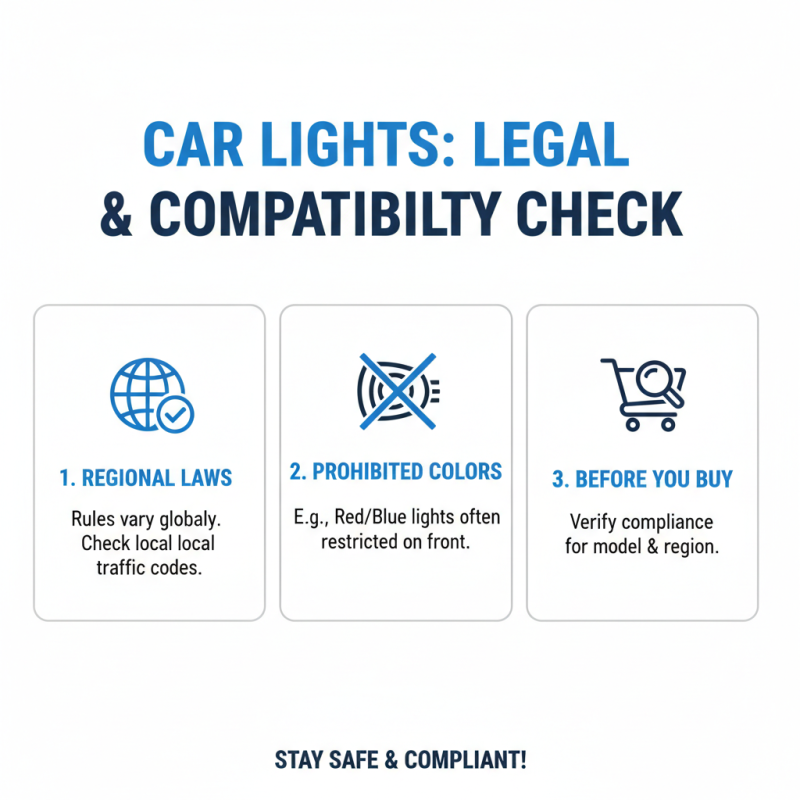
When choosing car lights, it’s crucial to consider legal regulations. Different regions have specific laws regarding the use of car lights. For instance, certain color lights may not be allowed on the front of the vehicle. Always check local regulations before making a purchase.
Compatibility is another vital factor. Make sure the lights fit your vehicle model. Incorrect lighting can lead to safety issues. It’s advisable to consult your car’s manual or a professional. Sometimes, an appealing light may not be suitable for your vehicle.
**Tips**: Do thorough research on the light types available. Take time to read customer reviews. Ensure the lights meet both safety standards and aesthetic preferences. If in doubt, seek professional advice. Remember, investing time in choosing the right lights can prevent future headaches.
Exploring Installation Options: DIY vs. Professional Help
Installing new car lights can be tricky. Choosing between DIY installation and seeking professional help is crucial. DIY offers cost savings and personal satisfaction. Many enjoy learning and tackling challenges. However, the process can be daunting for beginners. Sometimes, creativity can lead to mistakes.
On the other hand, professional installation ensures safety and correctness. Experts have experience with various car models. They understand the intricacies of wiring and fitting. This option can prevent potential malfunctions and costly repairs down the line. Yet, it often comes with higher expenses. It might not fit every budget.
Finding a balance is key. Assess your skill level and comfort. If uncertain, consult tutorials or forums for guidance. Consider the complexity of the installation. Simple light changes may be manageable. But complex upgrades might require expert help. Evaluating these factors will help make the right choice.
Types of Car Lights and Installation Methods