


Choosing a Prison LED Downlight manufacturer is not just a matter of comparing wattage or price. In secure facilities, lighting must provide clear visibility, withstand frequent cleaning, and maintain dependable performance over long operating hours. A poorly sealed fitting can collect dust around its trim. Glare can also make a corridor feel harsher than necessary. Small details matter.
Lighting researcher Dr. Mariana Figueiro has emphasized that light affects more than visibility; it can also influence comfort and human wellbeing. That perspective is useful when assessing products for cells, corridors, and shared spaces. A suitable downlight should offer stable output, controlled glare, a durable housing, and specifications that buyers can verify. Ask manufacturers for test reports, product dimensions, warranty terms, and clear information about maintenance. Claims should be checked, not simply repeated.
This China Top 10 guide introduces manufacturers for buyers comparing product ranges and supplier capabilities. It considers practical factors such as optical design, material quality, customization, and after-sales support. No ranking can capture every project’s needs. That matters. A fixture that performs well in one room may not suit another ceiling, cleaning routine, or lighting plan. Buyers should confirm samples and technical details before making a decision. Some supplier information may also be difficult to compare directly; that is a limitation worth keeping in view. The aim here is a useful starting point, not a substitute for careful specification.
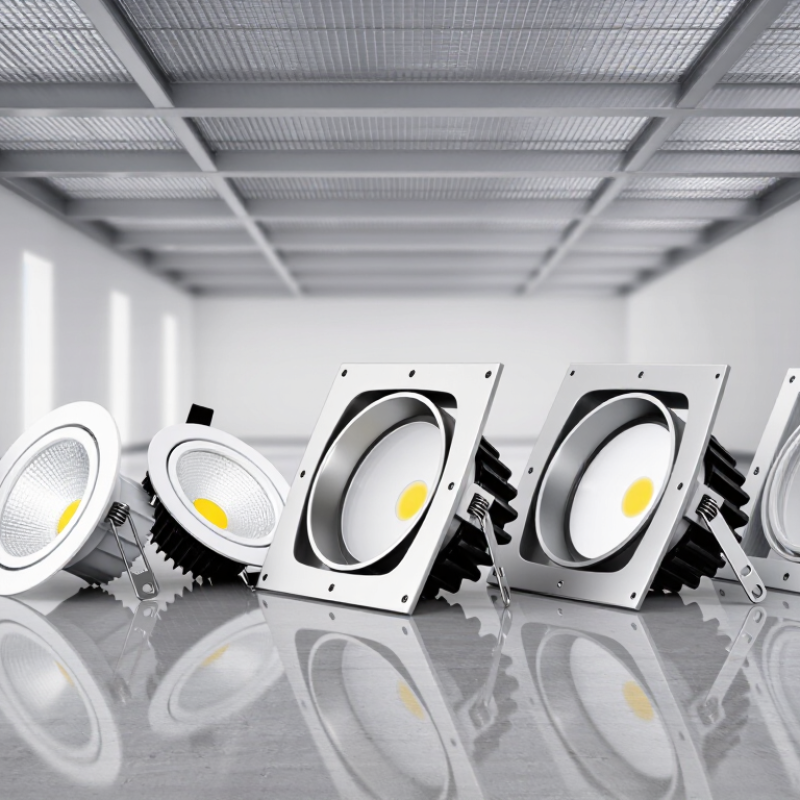
Prison LED downlights serve cells, corridors, control rooms, and interview areas, where lighting must support clear visibility and routine observation. A recessed, sealed design can reduce exposed edges and make the fixture harder to tamper with. Specify impact-resistant lenses, secure fasteners, and smooth surfaces that are straightforward to inspect. Uniformity matters. Bright spots and deep shadows can make faces, doorways, and floor transitions harder to see. A lighting plan should account for ceiling height, viewing angles, cleaning routines, and the needs of staff and occupants.
Core terms help buyers compare fixtures. Lumens describe light output; lux measures light reaching a surface. Correlated color temperature, or CCT, describes whether light appears warmer or cooler, while CRI indicates how naturally colors are rendered. IP ratings describe resistance to dust and moisture; IK ratings indicate impact protection. “Anti-ligature” refers to design intended to limit attachment points, but the term alone does not prove a fixture is suitable for a specific room. Details matter. Review drawings, product test records, maintenance access, and compatibility with emergency lighting with qualified facility and lighting professionals. A full-size mock-up can reveal glare or awkward shadows that a specification sheet misses. That step is easy to overlook.
For China’s prison LED downlight manufacturers, 100–150 lm/W should mean measured luminaire efficacy, not just the LED chip’s laboratory rating. The distinction matters: lenses, thermal design, and drivers all reduce delivered light. The U.S. Department of Energy’s 2022 Solid-State Lighting R&D Opportunities report describes leading LED packages exceeding 200 lm/W, while complete fixtures lose output through those system components. Ask for independent LM-79 test results at the stated operating temperature. A neat datasheet is not enough.
CRI ≥80 provides a practical baseline for corridors, cells, and staff work areas, where surfaces and clothing should appear reasonably natural. Yet general CRI does not fully describe saturated red rendering; checking the R9 value can reveal a weakness. CIE 13.3 sets out the established method for calculating general CRI. For CCT, 4,000 K gives a neutral-white appearance that can help staff distinguish details without the bluish cast of cooler lighting. Verify color consistency across batches, too. Small variations show.
A durable downlight also needs stable output during long operating hours. Request lumen-maintenance data and driver-failure information, not only initial brightness. The DOE report discusses lifetime and performance as key areas for SSL development, but published lab results cannot replace site checks. Honestly, 150 lm/W may be less valuable than a fixture that maintains its output and color after years of use. Test samples in the actual ceiling and observe glare, shadows, and cleaning access before selecting a production model.
China Top 10 Prison LED Downlight Manufacturers
Safety Verification: GB 7000.1, IEC 60598-1, and IP65 Ratings
For prison LED downlights, safety claims need checking at product level. GB 7000.1 and IEC 60598-1 address general luminaire safety, including construction, electrical protection, and testing. Ask for current test reports that match the exact model, not just a supplier’s general certificate. Check the label, rated voltage, wiring diagram, and installation instructions against the documents. Small differences matter.
IP65 means the enclosure is dust-tight and tested against water jets. It does not mean the fitting can be submerged. In a wash-down area, inspect the lens seal, cable entry, and ceiling interface; a loose gasket can undermine protection. Also confirm that the specified installation method preserves the tested rating. These standards and ratings do not, by themselves, prove resistance to impact or tampering. That point is easy to miss.
Tips: Match the report number to the product label. Look for the test laboratory, issue date, and tested configuration. If a document is unclear, pause and ask for clarification. A neat datasheet is useful, but physical samples and careful inspection still matter. No single rating answers every site question.
Manufacturer-neutral procurement checklist. These are verification criteria, not a ranked list or a claim that any particular product is certified. Confirm all requirements against the exact luminaire model, its installation conditions, and the standards applicable to the project.
| No. | Evaluation dimension | What to verify | Evidence to request or acceptance basis |
|---|---|---|---|
| 1 | GB 7000.1 safety requirements | Check whether the submitted downlight has been evaluated to the applicable edition of GB 7000.1, the general safety and test standard for luminaires. The standard alone does not establish suitability for every installation. | A test report or conformity documentation identifying the exact model, applicable standard edition, test scope, and issuing laboratory or certification body. |
| 2 | IEC 60598-1 safety requirements | Where IEC-based evaluation is required, verify assessment to the applicable edition of IEC 60598-1, which specifies general requirements and tests for luminaires. Do not assume that GB and IEC documentation is interchangeable. | Model-specific report or certification documentation listing IEC 60598-1 and the edition used. Confirm whether any applicable particular luminaire standard is also required. |
| 3 | IP65 ingress protection | For an IP65 claim, verify that the enclosure is dust-tight (first digit 6) and protected against water jets (second digit 5), as classified under IEC 60529. IP65 does not mean protection against immersion. | An ingress-protection test report for the exact model and tested configuration. Check seals, trims, cable entries, and any installation conditions stated in the report. |
| 4 | Electrical protection and earthing | Confirm the luminaire’s electrical protection method and, for Class I equipment, the protective-earth connection and continuity. Verify that the proposed supply and wiring arrangement match the product instructions. | Electrical safety test results, product wiring diagram, installation instructions, and the declared protection class for the submitted model. |
| 5 | Insulation and dielectric strength | Review insulation-resistance and dielectric-strength test results relevant to the luminaire’s construction and rated electrical characteristics. | Test report showing the tested model and relevant test outcomes under the applicable luminaire safety requirements. |
| 6 | Temperature and thermal safety | Check operating-temperature limits and thermal test results for the complete luminaire, including the LED driver. Confirm suitability for the specified ceiling, ambient temperature, and installation clearances. | Rated ambient-temperature information, thermal test results, and installation instructions specifying required clearances and any insulation-contact restrictions. |
| 7 | Markings and rated characteristics | Verify that product labels and documentation state the required electrical ratings and relevant installation or environmental limitations clearly and consistently. | Photographs or artwork of the product label, datasheet, and user instructions for the exact model; check that their ratings agree with test documentation. |
| 8 | Mounting and retention | Assess the mounting method, retention components, and ceiling compatibility. For secure facilities, separately specify and assess resistance to unauthorized removal or tampering; these are project-specific security requirements. | Mounting drawings, installation instructions, and project-defined security assessment. Do not treat GB 7000.1, IEC 60598-1, or an IP rating as proof of tamper resistance. |
| 9 | Driver and LED configuration | Confirm that the driver, LED module, and luminaire are evaluated as the offered configuration. Check input voltage, frequency, power, dimming method if applicable, and driver replacement instructions. | Datasheets and test documentation identifying the driver and LED configuration, plus instructions covering electrical connection and any permitted replacement components. |
| 10 | Traceability and change control | Ensure delivered units can be matched to the evaluated model and that changes to components or construction are controlled. A report for a similar product does not automatically cover the offered model. | Model and batch identification, document revision details, bill-of-materials control information, and written confirmation that supplied units match the documented configuration. |
China Top 10 Prison LED Downlight Manufacturers
Comparing China’s leading prison LED downlight makers requires more than checking catalogue wattage. Ask for photometric and electrical test reports for the finished luminaire, not just its LED component. IES LM-79 testing documents output and input power; LM-80 and TM-21 help assess LED-package lumen maintenance. These tests answer different questions. UNEP’s Global Lighting Challenge briefing estimates that lighting accounts for about 15% of global electricity use and 5% of greenhouse-gas emissions. That scale makes efficiency relevant, but a sector-wide figure cannot verify one factory’s claims.
Capacity should be checked against dated production records, not a large factory floor. Request monthly output, sample lead times, and evidence that test instruments receive calibration. The U.S. Department of Energy notes that LEDs can use up to 90% less energy and last up to 25 times longer than incandescent lighting; those are technology-level comparisons, not guaranteed results for every downlight. Traceability should connect each batch label to its driver, LED source, bill of materials, and inspection record. A buyer can select a sample carton and follow its paperwork back to the production date. Numbers matter. Still, documents can look tidy while real production varies, so repeat-sample testing and an occasional factory audit remain worthwhile.
China Top 10 Prison LED Downlight Manufacturers
Profiles of 10 Chinese Manufacturers: Product Ranges and Project Evidence
Comparing ten Chinese manufacturers calls for more than a catalogue review. Product ranges may include recessed downlights, surface-mounted fittings, emergency models, and options with different beam angles. For secure facilities, check measured output, glare control, housing material, ingress protection, and driver access. These details affect cleaning, maintenance, and consistent illumination. The IEA estimates that lighting uses about 15% of global electricity, underscoring the value of efficient, well-specified fixtures (IEA, “Lighting”). This global figure is not a prison-specific benchmark.
Project evidence helps distinguish documented capability from sales claims. Look for dated installation records, project type, fixture specifications, and independent test reports. Photographs alone prove little. Ask whether the stated lumen output and efficacy come from accredited photometric testing, such as an LM-79 report. Compare warranty terms and replacement arrangements, too. A supplier may show a broad range but limited evidence for demanding institutional projects. That gap deserves scrutiny.
Tips: Request one complete datasheet and a verifiable project reference for each shortlisted model. Check light distribution against actual room dimensions; a high lumen rating alone can mislead. Some claims remain hard to compare. I would flag missing test dates rather than assume every catalogue figure is current.